





What's Happening?
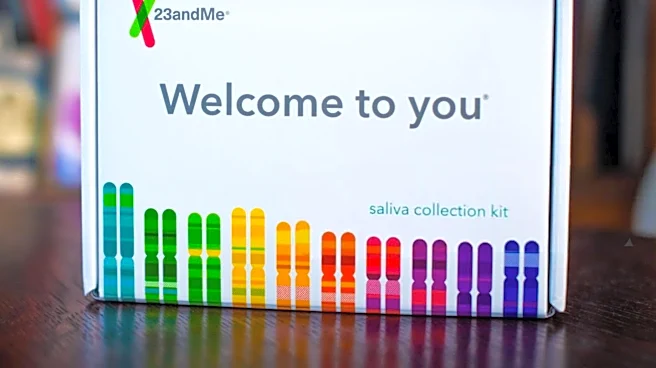
TTAM Research Institute received court approval on June 27, 2025, to acquire the assets of 23andMe for $305 million. This transaction marks a significant shift for the consumer genetics company, placing its business under nonprofit ownership. The acquisition
also includes additional privacy terms, which are expected to influence 23andMe's commercial positioning within the competitive nutrigenomic market. 23andMe operates in the consumer genetics segment, offering DNA testing services that include genetic testing, personalized health insights, ancestry analysis, and pharmacogenetics. The company is also noted for its involvement in the vitamins DNA test kit market, focusing on broader health implications related to vitamin and mineral metabolism. This ownership transition is a key development in the nutrigenomic industry, which is characterized by various approaches to genetic and microbiome-based health assessments.
Why It's Important?
The acquisition of 23andMe by TTAM Research Institute and its transition to nonprofit ownership carries significant implications for the consumer genetics industry and data privacy. The move to a nonprofit structure, coupled with enhanced privacy terms, could set a new precedent for how genetic data is managed and utilized, potentially influencing consumer trust and regulatory discussions around genetic information. For consumers, this could mean increased assurances regarding the handling of their sensitive genetic data. For the broader nutrigenomic market, this development highlights the evolving landscape where data privacy and ethical considerations are becoming increasingly central to commercial strategies. Competitors in the consumer genetics and DNA-based personalized nutrition sectors may need to adapt their own data handling practices to meet rising consumer expectations and potential new industry standards set by this acquisition.
What's Next?
Following the acquisition, 23andMe, now under the ownership of TTAM Research Institute, will likely focus on integrating its operations within the nonprofit framework and implementing the new privacy terms. This transition could lead to a re-evaluation of its service offerings and research initiatives, potentially emphasizing public health benefits or research-driven insights over purely commercial objectives. The market will be watching to see how these changes impact 23andMe's competitive standing against other players in the nutrigenomic space, such as microbiome testing providers like Viome Life Sciences and Tiny Health, and DNA-based personalized nutrition providers like Nutrigenomix. Future developments may include new research collaborations, revised data sharing policies, and potentially new product offerings that align with its nonprofit mission and enhanced privacy commitments.
Beyond the Headlines
The shift of a prominent consumer genetics company like 23andMe to nonprofit ownership, accompanied by additional privacy terms, could signal a broader trend in industries dealing with sensitive personal data. This move may reflect growing public and regulatory concerns about data commercialization and privacy in the genetic testing sector. It could also inspire other companies in the health tech and personalized medicine fields to explore alternative ownership models or adopt more stringent data governance policies. Ethically, this transition raises questions about the balance between commercial innovation and public good in genetic research. Legally, the new privacy terms could influence future legislative efforts concerning genetic data protection, potentially leading to more robust consumer protections and stricter industry standards across the United States.