





What's Happening?
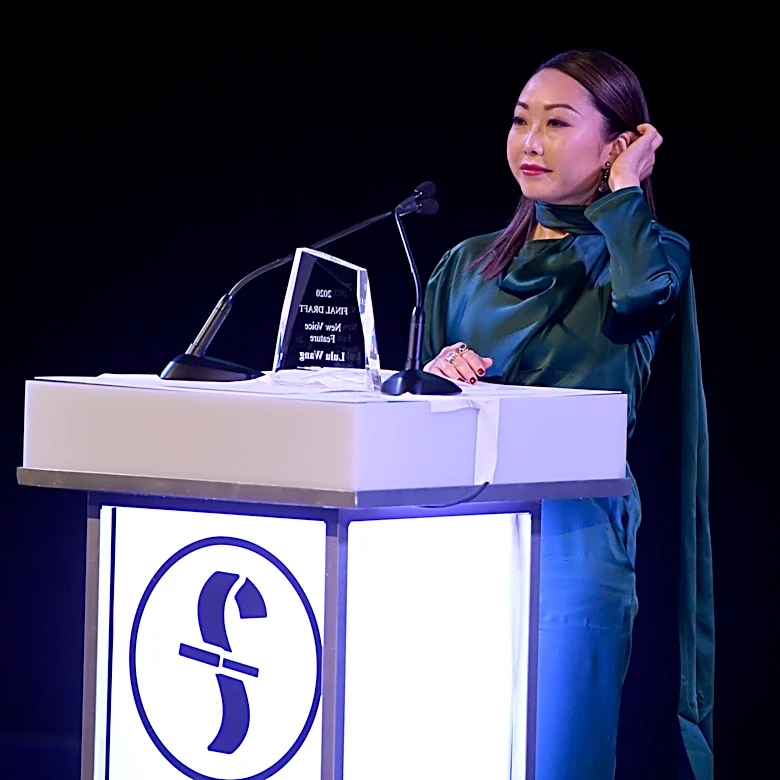
Author Doretta Lau's novel, 'We Are Underlings,' centers on a theme park dedicated to death and the afterlife, offering a unique blend of fantasy and realistic workplace minutiae. Lau, who previously worked in children's publishing and as a music clerk,
drew inspiration from her experiences with office bureaucracy and her childhood fascination with horror and sketch comedy. The book delves into the inner workings of startups and the challenges of corporate culture, anchoring its fantastical elements in a relatable, real-world setting. Lau aimed to create a narrative that explores complex themes like grief and the human preoccupation with sensational crime stories, while also incorporating humor to provide a sense of hope amidst grim realities. The protagonist, Zita, a marketer with a psychology background, narrates the story, allowing for an exploration of public spin and the artifice often present in various aspects of global culture.
Why It's Important?
Lau's 'We Are Underlings' is significant for its exploration of contemporary societal issues through a unique fictional lens. By setting a theme park around death and the afterlife, the novel prompts readers to consider their own perceptions of mortality, grief, and the commercialization of profound human experiences. The book's focus on corporate culture and startup dynamics reflects the pervasive influence of business practices on modern life, highlighting the ethical and moral dilemmas that can arise in pursuit of profit and innovation. The narrative's use of a PR buffer character, Zita, underscores the role of public relations in shaping narratives, a relevant commentary in an era dominated by media and information control. The blend of humor with serious themes suggests a coping mechanism for dealing with difficult realities, offering a perspective on how individuals navigate personal and societal challenges.
What's Next?
The novel's themes of corporate ethics, the commercialization of profound human experiences, and the role of public relations in shaping narratives are likely to resonate with readers and critics, potentially sparking discussions about these issues in broader cultural contexts. As the book explores the blurring lines between fiction and reality, particularly concerning technological advancements and their impact on human life, it may contribute to ongoing conversations about the future of technology and its ethical implications. The author's approach to integrating humor into a narrative about death and grief could also influence how future works of fiction tackle sensitive subjects, encouraging a more nuanced and hopeful perspective. The book's success could lead to further exploration of these themes in Lau's subsequent works or inspire other authors to delve into similar complex topics.
Beyond the Headlines
The novel's premise, a theme park devoted to death, touches upon deeper cultural anxieties surrounding mortality and the human desire to control or understand the unknown. This concept can be seen as a commentary on how modern society often attempts to package and commodify even the most fundamental aspects of human existence. The inclusion of corporate bureaucracy and startup culture within this fantastical setting highlights the pervasive influence of capitalist structures on all facets of life, suggesting that even death can become a product or service. Furthermore, the author's personal experience with grief, which informed the book's humorous elements, underscores the therapeutic power of storytelling and the human capacity to find light in darkness. The novel's exploration of 'life rights' for employees within the theme park raises ethical questions about individual autonomy and corporate control, reflecting broader concerns about privacy and exploitation in the digital age.