
What's Happening?
The Edith Farnsworth House in Plano, Illinois, a renowned icon of modern architecture designed by Ludwig Mies van der Rohe, is hosting a new exhibit titled 'Fertile Ground: Crossroads of Design in Mid-Century
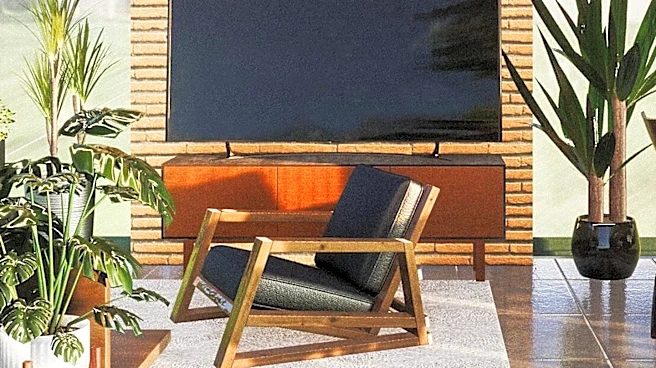
Mexico.' This exhibition is part of the house's 'Farnsworth Forward 75th anniversary celebration' and launched on August 23. 'Fertile Ground' delves into the architectural, design, and cultural movements that shaped Mexico's post-revolutionary transformation from the 1930s to the 1970s. The exhibit showcases a variety of items, including furniture, ceramics, textiles, photographs, and archival materials, displayed both within the Farnsworth House and its Barnsworth Gallery Studio. Arianna Kiriakos, Senior Assistant of Exhibitions and Programing at the Edith Farnsworth House, stated that the 'Farnsworth Forward' initiative aims to expand beyond the house's established history, exploring broader themes of modernity. The exhibition was organized in collaboration with the Museo Universitario Arte Contemporáneo (MUAC) in Mexico City, with Ana Elena Mallet, a leading expert in contemporary design, serving as the curator.
Why It's Important?
This exhibition at the Edith Farnsworth House is significant for several reasons. It broadens the narrative of modern design by highlighting the often-overlooked contributions and unique developments in mid-century Mexico. By juxtaposing Mexican design with the minimalist aesthetic of Mies van der Rohe, the exhibit fosters a 'meaningful dialogue exploring the transcultural exchange of mid-century innovation,' as noted by curator Ana Elena Mallet. This cross-cultural perspective enriches the understanding of global modernism, demonstrating that modernity was not a singular, monolithic movement but a diverse and interconnected phenomenon. For U.S. audiences, it offers a deeper appreciation of Mexico's rich design heritage and its influence, potentially fostering greater cultural understanding and academic exchange. The exhibit also reinforces the role of historic house museums like the Farnsworth House as dynamic educational institutions that can host diverse narratives and engage with contemporary issues, moving beyond being mere 'stagnant shrines' to their original architects. This initiative can inspire further research and appreciation for non-European and non-U.S. modern design movements.
What's Next?
The 'Fertile Ground' exhibition will continue to be on display at the Edith Farnsworth House through November 22 of this year. Visitors have the opportunity to experience the curated collection of Mexican mid-century design within the iconic modernist setting. The success of this exhibition may encourage the Edith Farnsworth House and similar institutions to host more diverse and internationally focused exhibits in the future, further expanding the scope of architectural and design history presented to the public. The collaboration between the Edith Farnsworth House and MUAC in Mexico City could also pave the way for future international partnerships, fostering a more global perspective on design and culture. The 'Farnsworth Forward' initiative, of which this exhibit is a part, suggests a continued commitment by the institution to explore new themes and interpretations of its historical significance, ensuring its relevance for future generations. The exhibit's focus on 'different ways of thinking about the same situation that is modernity' indicates a potential for ongoing discussions and programming around comparative modernisms.
Beyond the Headlines
The 'Fertile Ground' exhibit delves into the deeper implications of cultural exchange and the reinterpretation of modernity. It challenges the often Eurocentric or U.S.-centric view of modern design by showcasing how Mexican artists and designers adapted and innovated within their unique historical and cultural context. This highlights the idea that modernity is not a singular, universal style but a multifaceted concept shaped by local conditions, political transformations, and indigenous influences. The exhibit implicitly raises questions about cultural appropriation versus inspiration, and how different societies embrace or resist global aesthetic trends. By bringing 'Mexican invaders' into the iconic Farnsworth House, as described by Mallet, the exhibit creates a powerful symbolic dialogue, suggesting that cultural boundaries in design are fluid and permeable. This initiative contributes to a broader re-evaluation of design history, advocating for a more inclusive and global understanding of artistic and architectural movements, and recognizing the value of diverse perspectives in shaping our built environment.