





What's Happening?
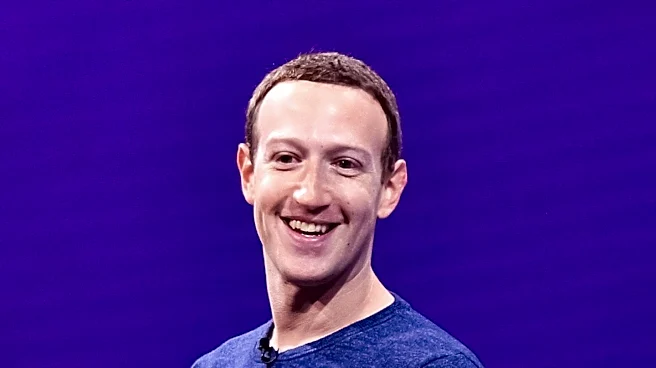
Mark Zuckerberg, CEO of Meta Platforms, is currently receiving approximately $2 million per day in dividends from his Meta shares. This income stream, which began in March 2024, has accumulated to nearly $2 billion in total. According to recent filings,
Zuckerberg holds 341,117,213 Meta shares, which at the current annual rate of $2.10 per share, translates to $716 million annually. Meta initiated its first cash dividend of 50 cents per share in February 2024, payable in March 2024, after 12 years as a public company without such a payout. The quarterly dividend was subsequently raised to 52.5 cents in February 2025 and has remained at that level. These dividends are paid to holding companies controlled by Zuckerberg, with payments occurring quarterly. His stake primarily consists of Class B stock, which carries 10 votes per share, giving him significant voting power within the company.
Why It's Important?
This substantial dividend income for Mark Zuckerberg highlights a significant shift in Meta's financial strategy, moving from a growth-focused company that reinvested all earnings to one that now returns capital to shareholders. For Zuckerberg, this dividend income far surpasses his reported annual compensation, which is largely comprised of security and aircraft costs, making him one of the highest-earning individuals from corporate dividends. The decision to pay dividends, even during periods of high capital expenditure and zero share buybacks in some quarters, indicates a commitment to shareholder returns. This could influence investor perception of Meta as a more mature, stable investment, potentially attracting a broader range of investors seeking income in addition to growth. The sheer scale of Zuckerberg's personal income from these dividends also underscores the immense wealth concentration at the top of major tech companies.
What's Next?
Meta's board is expected to declare its next quarterly dividend in early December. The consistency of the dividend rate at 52.5 cents per share since February 2025 suggests that it may remain stable, though the board retains the flexibility to adjust it. Future capital spending plans, which are projected to be between $135 billion and $145 billion for 2026, will be a key factor in the company's ability to maintain or increase dividend payouts. While Zuckerberg's share count has slightly decreased due to sales under prearranged trading plans and gifts to philanthropic organizations like the Biohub, his overall financial interest remains substantial. The ongoing performance of Meta's stock, which has seen fluctuations, will also influence the yield on these dividends for all shareholders.
Beyond the Headlines
The substantial dividend payments to Mark Zuckerberg raise broader questions about wealth distribution and philanthropic pledges. While Zuckerberg and Priscilla Chan pledged in 2015 to give away 99% of their Meta shares during their lifetimes, the dividend income is not explicitly tied to this pledge in public filings. This separation allows for significant personal wealth accumulation even as shares are donated. The strategy of receiving dividends while simultaneously engaging in philanthropic share transfers highlights the complex financial planning employed by ultra-high-net-worth individuals. Furthermore, the shift to dividend payments by a major tech company like Meta could signal a broader trend in the tech industry as companies mature, potentially impacting how investors view and value these firms in the long term, moving beyond pure growth metrics to include income generation.