






What's Happening?
Rigetti Computing, a developer of superconducting quantum integrated circuits, has entered into an agreement to receive up to $100 million from the U.S. Department of Commerce. This funding is designated to support critical technology development, including
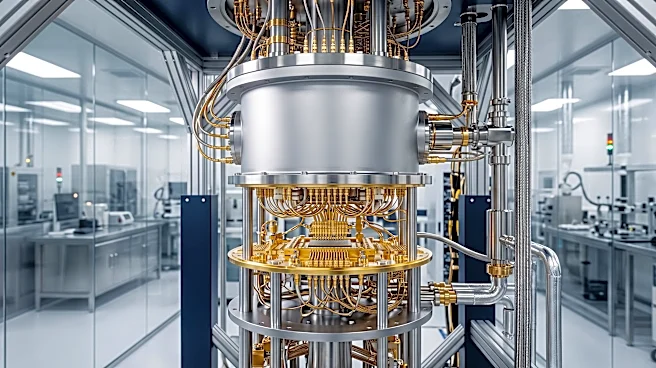
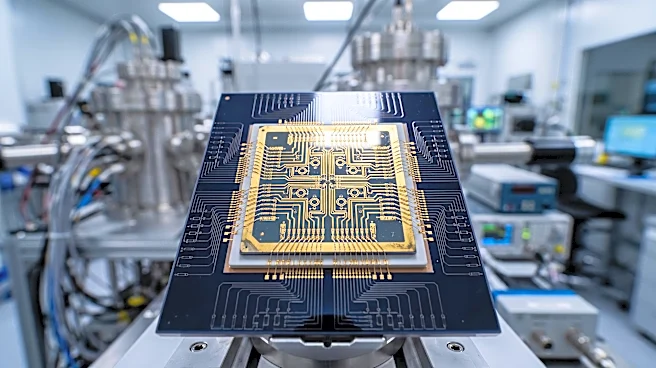
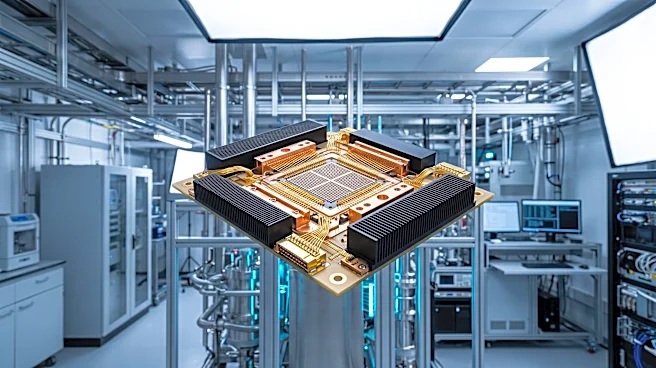
advanced chip architectures, expanded cryogenic infrastructure, and next-generation readout electronics. The company recently demonstrated progress with its 108-qubit Cepheus-1 processor, achieving 99.5% median two-qubit gate fidelity in the third quarter of 2026. Rigetti's long-term roadmap includes plans to introduce a processor with over 300 qubits and approximately 99.7% median two-qubit gate fidelity by mid-2028, followed by a system exceeding 1,000 qubits with 99.9% fidelity within the subsequent three years. The company's modular chiplet approach is a key differentiator, aiming to enhance processing capacity within a single dilution refrigerator, potentially reducing the need for complex networking between separate quantum systems.
Why It's Important?
This significant federal funding underscores the U.S. government's commitment to advancing quantum computing capabilities, recognizing its strategic importance for national security and technological leadership. For Rigetti Computing, the investment provides crucial capital to accelerate its research and development efforts, potentially solidifying its position in the nascent but rapidly evolving quantum computing industry. The development of more powerful and reliable quantum systems could have transformative impacts across various U.S. sectors, including defense, finance, and scientific research, by enabling computations currently impossible for classical computers. However, the industry is still in its early commercialization phase, primarily serving research and development needs. The challenge remains for Rigetti to translate these engineering advancements into commercially viable solutions, requiring continuous improvements in qubit coherence, gate fidelity, connectivity, and real-time error-correction capabilities. The success of companies like Rigetti is vital for the U.S. to maintain a competitive edge in the global quantum race.
What's Next?
Rigetti Computing will proceed with utilizing the $100 million federal funding to advance its quantum technology roadmap. This includes developing advanced chip architectures, expanding cryogenic infrastructure, and refining next-generation readout electronics. The company is focused on achieving its stated goals of introducing a processor with over 300 qubits and 99.7% median two-qubit gate fidelity by mid-2028, and a system with more than 1,000 qubits and 99.9% fidelity within three years after that. The industry will be watching for further demonstrations of improved qubit coherence, gate fidelity, and connectivity, as well as progress in real-time error-correction capabilities. Rigetti's ability to convert these technological advancements into sustainable revenue growth and broader customer adoption will be critical for its long-term prospects and the commercial viability of quantum computing solutions.
Beyond the Headlines
The federal investment in Rigetti Computing highlights a broader strategic imperative for the U.S. to foster domestic innovation in critical emerging technologies like quantum computing. Beyond the immediate financial support, this funding signals a governmental endorsement that could attract further private investment and talent to the sector. The modular chiplet approach Rigetti is pursuing could set a precedent for how quantum systems are designed and scaled, potentially influencing industry standards and deployment economics. However, the ethical implications of advanced quantum computing, particularly concerning data security and cryptographic capabilities, will become increasingly relevant as the technology matures. The long-term success of this initiative will depend not only on technical breakthroughs but also on the establishment of robust regulatory frameworks and a skilled workforce capable of harnessing these powerful new computational tools, ensuring responsible development and deployment.