



What's Happening?
Several San Diego Padres players have engaged in 'clubhouse chatter' regarding which of their teammates possess the qualities to become future managers. Among those frequently mentioned is pitcher Joe Musgrove, who, despite recovering from Tommy John
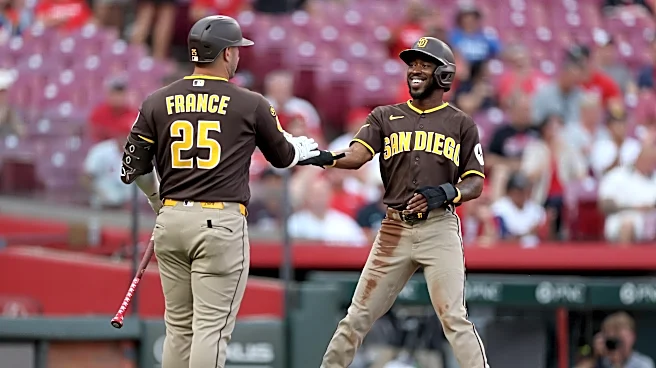
surgery, maintains a significant presence and leadership role within the team. First baseman Gavin Sheets noted Musgrove's 'presence' and believed players would 'play hard for him.' Veteran pitcher Yu Darvish is also seen as a strong candidate, with Jason Adam describing him as a 'super smart, all-around baseball mind.' Michael King, another pitcher, received compliments for being 'well-rounded' and understanding the game, though he humorously nominated position player Ty France instead. France, a former All-Star and Gold Glover, is praised for his communication skills and ability to motivate both pitchers and position players. Other names that emerged include Jake Cronenworth, known for his in-game strategic thinking and leadership in the players' union, and Gavin Sheets himself, who is recognized for his game knowledge and ability to connect with teammates. These discussions highlight the leadership qualities and baseball acumen present within the Padres' roster.
Why It's Important?
This internal discussion among San Diego Padres players about potential future managers is important because it offers a unique insight into the qualities valued within a professional baseball clubhouse. It highlights that leadership in sports extends beyond on-field performance, encompassing communication skills, strategic thinking, and the ability to connect with diverse personalities. Identifying players like Joe Musgrove, Yu Darvish, Ty France, Michael King, Jake Cronenworth, and Gavin Sheets as 'manager material' underscores the importance of experience, game intelligence, and interpersonal dynamics in leadership roles. For the Padres organization, recognizing these internal leadership assets could inform future coaching and managerial decisions, potentially fostering a pipeline of talent from within their own ranks. This approach can lead to a more cohesive and understanding coaching staff, as former players often bring a unique perspective to managing. Furthermore, it reflects a healthy team culture where players are observant of and appreciate their teammates' leadership capabilities, which can contribute to overall team chemistry and success. The insights gained from these discussions could influence how teams develop and identify future leaders in the sport.
What's Next?
While these discussions are informal 'clubhouse chatter,' they provide a glimpse into the potential future leadership landscape of the San Diego Padres and professional baseball. There are no immediate actions or decisions stemming directly from these player opinions. However, the insights shared by players like Gavin Sheets, Jason Adam, and Griffin Canning could subtly influence how the organization views and develops its current roster members for future leadership roles. Players like Joe Musgrove, Yu Darvish, Ty France, Michael King, Jake Cronenworth, and Gavin Sheets will continue their playing careers, but their demonstrated leadership qualities and baseball acumen will likely be noted by team management and potentially by other organizations seeking managerial talent. The ongoing development of these players, both on and off the field, will be observed, and their potential to transition into coaching or managerial positions after their playing days could become a more formal consideration in the long term. This type of internal recognition often precedes external opportunities in the highly competitive world of professional sports management.
Beyond the Headlines
The 'clubhouse chatter' about potential managerial candidates delves into the deeper, often unacknowledged, aspects of leadership development within professional sports. It reveals that the qualities of a successful manager are not solely about tactical knowledge but also about emotional intelligence, mentorship, and the ability to foster a cohesive team environment. The emphasis on players who can 'relate to the top and bottom of a depth chart' or 'motivate both pitchers and position players' speaks to the complex human dynamics inherent in managing a diverse group of high-performing individuals. This informal assessment process within the clubhouse acts as a natural proving ground for leadership, where players observe and evaluate each other's character, communication styles, and strategic thinking in real-time. It also highlights the value of experience and resilience, as seen in Musgrove's continued influence despite injury, or France's ability to reinvent his career. This phenomenon suggests that the most effective leaders in sports often emerge organically from within the ranks, having earned the respect and trust of their peers through their actions and understanding of the game's intricate social fabric. It's a testament to the idea that true leadership is often recognized and cultivated from the ground up, long before formal titles are bestowed.