






What's Happening?
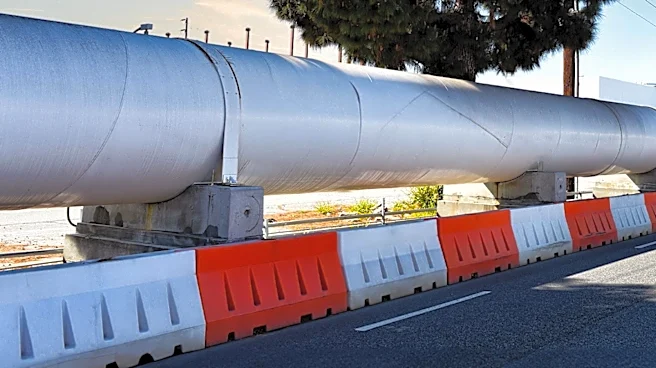
Devon Energy Corporation has announced a positive Final Investment Decision (FID) for the Solitude Pipeline System, a joint venture led by WhiteWater. This project involves the construction of two 48-inch natural gas pipelines designed to connect the Permian
Basin to Katy, Texas. The Solitude Pipeline System is a strategic move by Devon Energy to integrate and consolidate infrastructure supporting its operations in the Delaware Basin, where it holds a significant acreage position. The company aims to convert basin-level constraints into durable margins and capture value across the entire value chain, from the wellhead to the demand center. The project is backed by long-term firm transportation agreements with investment-grade shippers. Devon Energy holds a 25% stake in the joint venture, which also includes MPLX, Diamondback Energy, and Western Midstream Partners. The initial phase of the pipeline is expected to have a capacity of approximately 2.25 billion cubic feet per day (Bcf/d) and is slated to be operational by late 2029, with a second phase adding another 2.25 Bcf/d in 2030. This development is part of Devon's broader strategy to enhance its natural gas portfolio and access growing LNG export and power generation markets.
Why It's Important?
This investment is crucial for the U.S. energy sector, particularly for natural gas producers in the Permian Basin. For years, Permian producers have faced volatile and often negative pricing at the Waha hub due to insufficient takeaway capacity, which has struggled to keep pace with associated gas growth. The Solitude Pipeline System will provide firm, long-haul capacity to the Gulf Coast, effectively moving a significant portion of Devon Energy's Delaware Basin gas out of the Waha market. This will allow access to markets tied to expanding Liquefied Natural Gas (LNG) export facilities and power generation, where North American liquefaction capacity is projected to more than double by the end of the decade. By securing this infrastructure, Devon Energy aims to lower its cost of supply, drive higher free cash flow, and enhance its Delaware Basin return profile. This project also signifies a broader industry trend of energy companies investing in midstream infrastructure to de-risk operations and optimize value creation from their production assets, ensuring more stable and profitable gas sales.
What's Next?
The construction of the Solitude Pipeline System will proceed, with the first phase expected to be in service by late 2029 and the second phase by 2030, pending customary regulatory approvals. Devon Energy will continue to integrate its operations, leveraging this new pipeline to secure international LNG-linked pricing, building on existing agreements for 100 million cubic feet per day (MMcf/d) starting in 2027 and an additional 150 MMcf/d in 2028. The company also plans to supply 115 MMcf/d over a seven-year term to CPV's 1,350-megawatt Basin Ranch Energy Center in Ward County, Texas, beginning in 2028. This strategic infrastructure development is anticipated to provide long-dated capacity and further diversify Devon's pathways to growing LNG and power-generation demand, potentially influencing future investment decisions in the Permian Basin and the broader U.S. natural gas market.
Beyond the Headlines
The Solitude Pipeline System represents a significant step in addressing the long-standing issue of natural gas egress from the Permian Basin, which has often led to gas flaring and economic inefficiencies. By providing dedicated takeaway capacity, this project could reduce environmental impacts associated with stranded gas and improve the overall economic viability of Permian production. Furthermore, Devon Energy's integrated business model, which includes investments in electrical distribution infrastructure, microgrids, and water management systems, highlights a comprehensive approach to resource development. This strategy aims not only to mitigate operational constraints but also to create new revenue streams and enhance resilience against market fluctuations. The move towards international LNG-linked pricing also underscores the increasing globalization of U.S. natural gas markets, positioning domestic producers to capitalize on global energy demand and potentially influencing U.S. energy policy and trade relations.