






What's Happening?
Major League Baseball (MLB) is considering a new financial proposal that includes a $258 million salary cap and a $180 million salary floor, slated for implementation in 2028. This system would require high-spending teams, such as the Los Angeles Dodgers
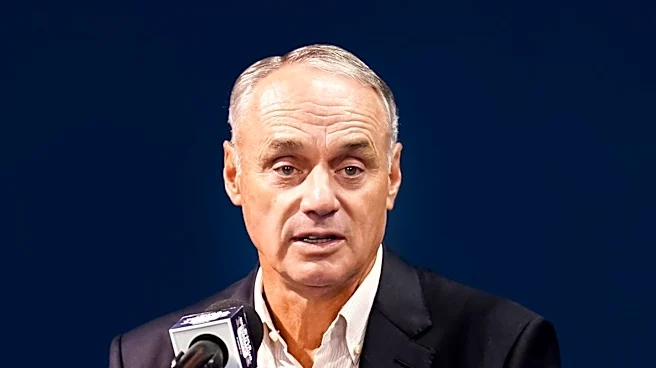
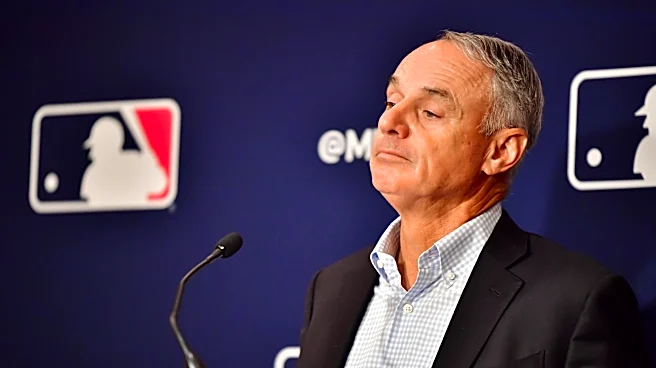
and the New York Yankees, to reduce their payrolls. Conversely, 12 other teams, including the Pittsburgh Pirates, would be compelled to increase their spending to meet the proposed salary floor. The league's commissioner, Rob Manfred, is reportedly pushing for this change, which could force owners like Bob Nutting of the Pirates to invest more significantly in player salaries. The MLB Players Association, however, has historically expressed opposition to salary caps, indicating potential hurdles for the proposal's final approval.
Why It's Important?
This proposal represents a significant shift in MLB's economic structure, aiming to address the perceived imbalance between high-spending and low-spending franchises. For teams like the Pittsburgh Pirates, it means a mandatory increase in player investment, which could lead to more competitive rosters and improved on-field performance. This could benefit fans in markets with historically lower payrolls by offering a more exciting product. For the league as a whole, a salary floor could foster greater competitive balance, potentially increasing fan engagement and viewership across all teams. However, the resistance from the MLB Players Association to a salary cap highlights a fundamental disagreement over player compensation, which could lead to contentious negotiations and impact the league's labor relations.
What's Next?
The proposed salary cap and floor system is currently slated for a 2028 implementation, but this timeline is contingent on agreement from the MLB Players Association. The players have historically been against salary caps, viewing them as a limitation on earning potential. Therefore, significant negotiations are anticipated between the league and the players' union. If approved, teams like the Pittsburgh Pirates will need to strategize how to allocate their increased payrolls effectively to build competitive teams. The delay until 2028 is intended to give teams sufficient time to adjust their financial models and roster constructions. The outcome of these negotiations will determine the future financial landscape of Major League Baseball.
Beyond the Headlines
The debate over salary caps and floors in MLB touches upon deeper issues of competitive integrity and economic fairness within professional sports. While a salary floor aims to prevent teams from consistently under-spending and fielding non-competitive rosters, a salary cap can be seen as limiting player mobility and earning potential. This proposal could redefine the relationship between team owners and players, potentially leading to a more equitable distribution of talent and resources across the league. However, it also raises questions about the autonomy of team owners and the potential for unintended consequences, such as teams spending just enough to meet the floor without genuinely striving for championship contention. The long-term cultural impact on fan loyalty and team identity in smaller markets will also be a key area to watch.