






What's Happening?
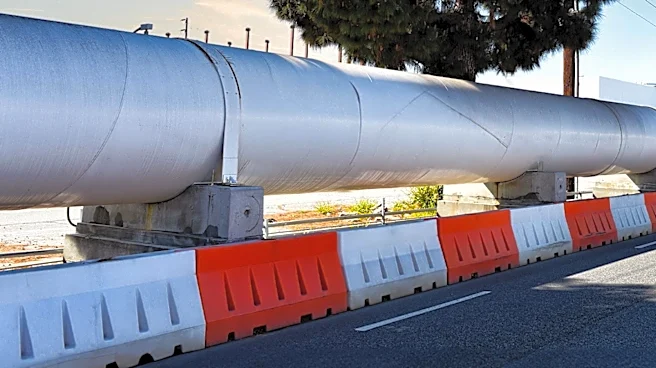
A consortium of companies, including WhiteWater, Devon Energy, MPLX, Diamondback Energy, and Western Midstream Partners, has made a final investment decision to proceed with the Solitude Pipeline System. This joint venture will construct two 48-inch natural
gas pipelines designed to transport natural gas from the Permian Basin to Katy, Texas. The project has secured substantial long-term firm transportation agreements with predominantly investment-grade shippers, underpinning the decision. The Solitude system is planned for a phased design, with an initial capacity of approximately 2.25 Bcf/d expected by late 2029, followed by an additional 2.25 Bcf/d in 2030. The partners retain the flexibility to further increase capacity based on shipper demand and market dynamics. WhiteWater holds a 50% stake in the venture, Devon Energy 25%, MPLX 10%, and Diamondback Energy and Western Midstream Partners each hold 7.5%.
Why It's Important?
This development is crucial for the U.S. energy sector, particularly for the Permian Basin, which is a major oil and gas producing region. The new pipeline infrastructure will address the growing need for natural gas takeaway capacity, supporting continued production growth in the Permian Basin and meeting expanding Gulf Coast consumption, including liquefied natural gas (LNG) exports. Increased pipeline capacity helps ensure that natural gas can be efficiently transported to markets, preventing potential bottlenecks that could otherwise limit production or lead to price volatility. For the participating companies, this investment represents a strategic move to enhance their midstream assets and secure long-term revenue streams through firm transportation agreements. The project's ability to accommodate evolving market dynamics through its flexible design also highlights a proactive approach to energy infrastructure development in a dynamic market.
What's Next?
The Solitude Pipeline System is set to begin commissioning its initial capacity of approximately 2.25 Bcf/d by late 2029, with a second phase adding another 2.25 Bcf/d in 2030. The joint venture partners will proceed with the construction and development of the two 48-inch natural gas pipelines. Future steps will involve monitoring market demand and potentially accelerating or deferring additional capacity commissioning to align with evolving market dynamics. The project's success will depend on the timely completion of construction, adherence to regulatory requirements, and the continued demand for natural gas from the Permian Basin and Gulf Coast markets. Stakeholders, including energy producers, consumers, and investors, will be watching the progress of this significant infrastructure project.
Beyond the Headlines
The Solitude Pipeline System's final investment decision underscores a broader trend in the U.S. energy landscape: the ongoing reliance on natural gas as a transitional fuel and a key component of the energy mix, even amidst growing calls for renewable energy. While the project aims to support economic growth in the Permian Basin and facilitate LNG exports, it also highlights the environmental considerations associated with fossil fuel infrastructure. The development of such large-scale pipelines often involves complex regulatory processes and can face opposition from environmental groups. However, the project's emphasis on supporting Gulf Coast demand, including LNG exports, positions the U.S. as a significant player in global energy markets, influencing international energy security and pricing. The long-term firm transportation agreements also reflect a strategic commitment by shippers to secure reliable energy supply, indicating confidence in the sustained demand for natural gas.