






What's Happening?
The U.S. economy experienced a significant expansion in the third quarter of 2026, with real gross domestic product (GDP) increasing at an annualized rate of 3.4 percent. This marks an acceleration from the 2.2 percent growth observed in the second quarter.
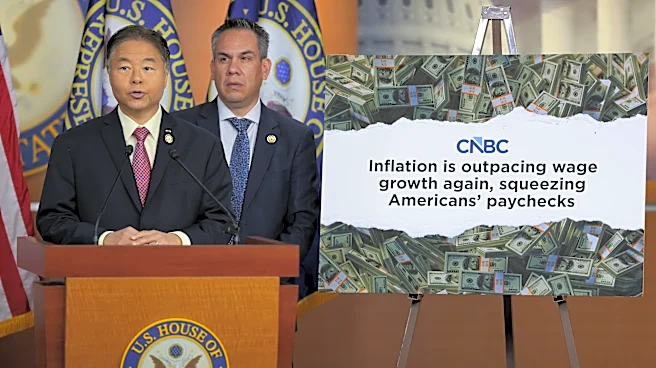
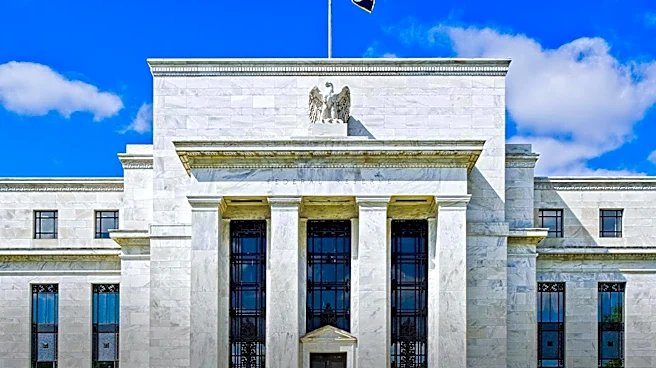
The Bureau of Economic Analysis (BEA) reported that this growth was primarily fueled by increases in business investment, consumer spending, and government spending. A particularly notable driver was the surge in business investment, specifically in equipment and technology, including artificial intelligence (AI) infrastructure. Despite this robust economic activity, the Federal Reserve, at its October meeting, opted to hold interest rates steady at 3.75 to 4 percent, following a quarter-point increase in September. The Federal Open Market Committee (FOMC) acknowledged the strong pace of economic expansion but also highlighted elevated uncertainty and persistent inflationary pressures. Data released subsequently indicated that the Personal Consumption Expenditures (PCE) price index, the Fed’s preferred inflation measure, rose 0.5 percent monthly and 3.6 percent year-over-year.
Why It's Important?
The strong 3.4% GDP growth indicates a resilient U.S. economy, driven by key sectors like business investment and consumer spending. The significant investment in AI infrastructure suggests a forward-looking economic strategy, potentially positioning the U.S. for future productivity gains and technological leadership. This influx of capital into AI could reshape various industries, fostering innovation and creating new economic opportunities. However, the Federal Reserve's decision to maintain interest rates, despite strong growth, underscores ongoing concerns about inflation. Elevated inflation, as indicated by the PCE price index, could erode purchasing power and impact consumer confidence, potentially leading to a more cautious approach from the Fed in future monetary policy decisions. The interplay between robust economic expansion and persistent inflationary pressures creates a complex environment for policymakers and businesses, balancing growth with price stability.
What's Next?
The Federal Reserve will continue to closely monitor economic indicators, particularly inflation data and employment figures, to guide its future monetary policy decisions. The sustained investment in AI infrastructure is expected to continue, potentially leading to further technological advancements and shifts in the labor market. Businesses will likely continue to integrate AI into their operations, aiming for increased efficiency and productivity, which could have long-term implications for job roles and skill requirements. Consumers may face continued inflationary pressures, influencing their spending habits and financial planning. The next release of the Penta-CivicScience Economic Sentiment Index (ESI) on November 18, 2026, will provide further insights into public confidence regarding the U.S. economy, offering a glimpse into how these mixed signals are being perceived by the general public.
Beyond the Headlines
The substantial investment in artificial intelligence infrastructure highlights a broader economic transformation underway, where technological innovation is becoming a primary driver of growth. This shift could lead to a re-evaluation of traditional economic models and a greater emphasis on digital infrastructure as a critical component of national competitiveness. The tension between economic growth and inflation also brings to the forefront the ongoing debate about the effectiveness of current monetary policies in managing a dynamic economy. Furthermore, the focus on AI investment raises ethical and societal questions regarding job displacement, the future of work, and the equitable distribution of the benefits derived from advanced technologies. The long-term implications of this AI-driven growth on income inequality and societal structures will be a critical area of observation.