




What's Happening?
Ridley Scott's seminal science fiction films, 'Alien' and 'Blade Runner,' are serving as foundational influences for new television adaptations, specifically 'Blade Runner 2099' and 'Alien: Earth.' These new series are not merely continuing narratives
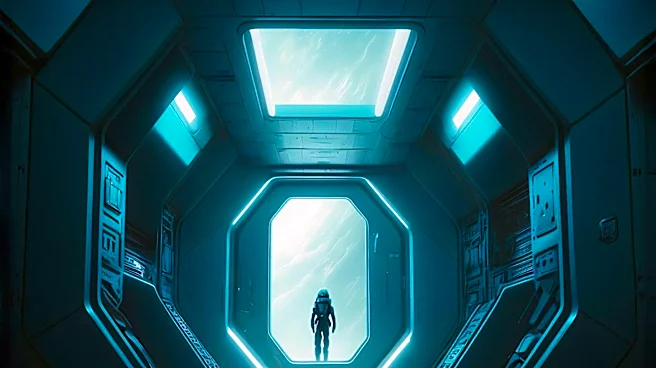
but are attempting to replicate the distinct atmospheric 'vibes' established by Scott's original works. Both 'Alien' (1979) and 'Blade Runner' (1982) are recognized for their immersive world-building, characterized by elements like the grimy, wet, and dark dystopian Los Angeles in 'Blade Runner,' and the claustrophobic, dimly lit corridors of the spaceship in 'Alien.' The article highlights that the enduring cultural impact of these films stems more from their aesthetic and emotional resonance than their narrative plots, which were often adaptations or simpler concepts. This 'vibes-first' approach is seen as a new trend in media, where the atmosphere and aesthetic are prioritized over strict story continuity or character development.
Why It's Important?
The emphasis on 'vibes' in adapting iconic science fiction franchises like 'Alien' and 'Blade Runner' signifies a shift in how intellectual properties are extended in the entertainment industry. This approach suggests that a film's lasting legacy and potential for spin-offs may rely more on its aesthetic and emotional impact than its original storyline. For the U.S. entertainment industry, this could mean a greater focus on visual and atmospheric fidelity in adaptations, potentially leading to higher production values dedicated to set design, cinematography, and soundscapes. It also implies that creators of new content within established universes might prioritize capturing the 'feel' of the original over adhering strictly to canon, which could either broaden appeal or alienate purist fans. This trend could influence how studios greenlight projects, favoring those that can successfully evoke a specific mood or aesthetic, potentially impacting creative roles and budgetary allocations in film and television production.
What's Next?
The success or failure of 'Blade Runner 2099' and 'Alien: Earth' in capturing the 'vibes' of their predecessors will likely dictate future strategies for adapting classic science fiction and other genre films. If these 'vibes-first' adaptations resonate with audiences, it could establish a new paradigm for franchise expansion, encouraging more projects that prioritize atmospheric recreation over direct narrative continuation. This could lead to a proliferation of spin-offs and re-imaginings that focus on aesthetic homage. Conversely, if these shows fail to connect, it might prompt a re-evaluation of this strategy, potentially leading studios back to more traditional narrative-driven adaptations or original content creation. The reception of these series will be closely watched by industry executives, creators, and fans alike, as it could shape the future of how beloved cinematic universes are brought to the small screen.
Beyond the Headlines
The 'vibes-first' approach to adapting classic films like 'Alien' and 'Blade Runner' touches upon deeper questions about the nature of storytelling and cultural memory. It suggests that for some iconic works, the emotional and aesthetic experience they provide is more fundamental to their identity than their plot or characters. This raises ethical considerations regarding artistic integrity and the balance between homage and innovation. While replicating a film's 'vibe' can honor its legacy, an over-reliance on aesthetic mimicry without substantial narrative or thematic depth could lead to superficial adaptations. This trend also highlights the evolving relationship between original creators and subsequent generations of artists, where the 'spirit' of a work becomes a transferable asset. Culturally, it reflects a broader appreciation for immersive experiences and atmospheric storytelling, potentially influencing other art forms beyond film and television.