






What's Happening?
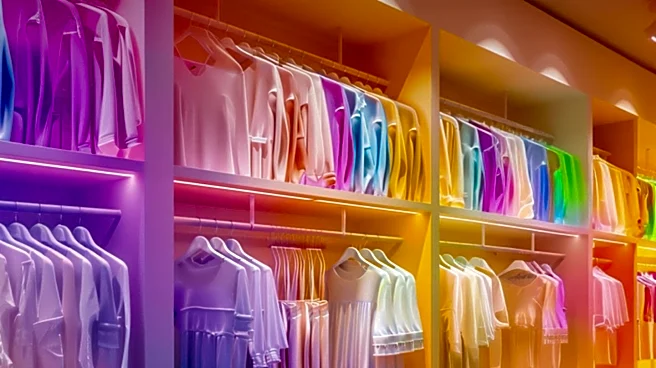
A new trend in fashion is emerging where designers are creating 'adversarial clothing' intended to confuse AI-powered facial recognition systems. Brands like Urban Privacy and Cap_able are developing garments with sophisticated combinations of shapes,
colors, and repeating motifs designed to exploit weaknesses in computer vision systems and disrupt their ability to identify faces. For instance, Urban Privacy uses oversized prints, asymmetrical cuts, and even LED lights emitting infrared light to interfere with surveillance cameras. This movement stems from growing public anxiety over the spread of facial recognition technology and concerns about privacy and surveillance. Studies have also highlighted that some systems have a higher risk of misidentifying Black and Asian individuals compared to white individuals, further fueling these concerns.
Why It's Important?
This development signifies a growing societal pushback against pervasive surveillance technologies and raises important questions about privacy in the digital age. As AI-powered facial recognition becomes more widespread in public spaces, the ability of individuals to maintain anonymity and control their personal data is diminishing. The emergence of 'anti-surveillance fashion' reflects a desire to reclaim personal privacy and highlights the ethical dilemmas associated with advanced surveillance. While the effectiveness of such clothing can vary depending on the surveillance system, its growing popularity, particularly within countercultural fashion, indicates a significant cultural shift. If adopted by mainstream fashion, it could challenge the efficacy of existing surveillance infrastructures and prompt further debate on regulatory frameworks for AI and privacy.
What's Next?
The 'anti-surveillance fashion' trend is poised to gain more traction, especially if a high-profile celebrity adopts it, potentially pushing it into the mainstream. This could lead to increased demand for such products and further innovation in design and technology aimed at evading AI detection. Conversely, developers of facial recognition systems may respond by creating more sophisticated algorithms capable of overcoming these 'adversarial' patterns, leading to an ongoing technological arms race between privacy advocates and surveillance entities. This could also spur legislative discussions around the regulation of facial recognition technology and the right to privacy in public spaces, potentially influencing future policy decisions regarding data collection and individual rights.
Beyond the Headlines
Beyond its immediate practical application, 'adversarial clothing' represents a form of artistic and social commentary on the increasing digitization and surveillance of everyday life. It embodies a cultural resistance against the erosion of privacy and the potential for algorithmic bias in AI systems. This trend also highlights the broader implications of AI on human autonomy and freedom, prompting deeper philosophical questions about what it means to be 'seen' or 'unseen' in a technologically advanced society. The fashion industry, often a mirror of societal anxieties, is now actively participating in a dialogue about the future of privacy, suggesting a growing public awareness and concern that extends beyond niche tech discussions into everyday life and personal expression.