



What's Happening?
United Parcel Service (UPS) is significantly expanding its Access Point network, a system designed to offer secure and convenient alternatives to traditional home delivery. This initiative involves partnering with local businesses such as grocery stores,
dry cleaners, pharmacies, and gas stations, as well as utilizing dedicated UPS Store locations and self-service locker kiosks. The program aims to address the challenges of 'last-mile' logistics by allowing customers to pick up or drop off packages at these designated locations. This approach consolidates individual shipments for carriers, optimizing transit routes and ensuring packages are securely logged upon the first attempt. For local businesses, participation offers compensation and increased foot traffic, as customers often make additional purchases when visiting to manage their parcels. The network provides extended operating hours, including evenings and weekends, and a standard holding window of seven calendar days for packages.
Why It's Important?
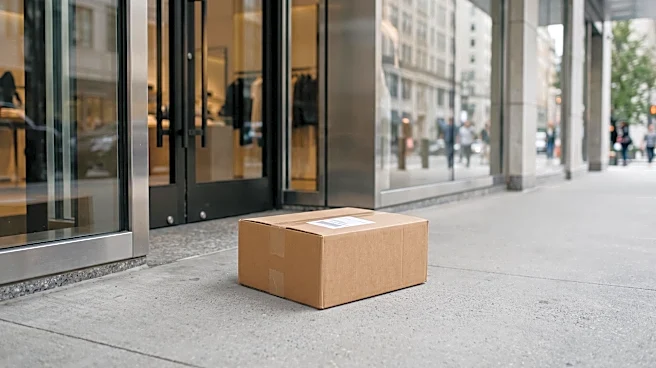
The expansion of the UPS Access Point network holds significant importance for both consumers and businesses in the U.S. For consumers, it dramatically reduces the risk of package theft, a growing concern with unattended home deliveries. By requiring valid government-issued photo ID or unique verification codes for pickup, the system enhances security for high-value items and sensitive documents. Additionally, packages are protected from environmental damage as they are stored in climate-controlled, organized holding areas. For e-commerce entrepreneurs and small business owners, the network simplifies outbound logistics by offering flexible drop-off options, eliminating the need to wait for scheduled carrier pickups. This flexibility can accelerate processing times and improve operational efficiency. The mutual benefits for UPS and its local business partners also contribute to local retail economies by driving increased customer visits and potential sales.
What's Next?
The continued expansion of the UPS Access Point network is expected to further integrate package management into the daily routines of U.S. consumers. As more local businesses join the program, the accessibility and convenience of parcel services will likely increase, potentially shifting consumer preferences away from traditional home delivery for certain types of shipments. This could lead to a reduction in missed deliveries and re-delivery attempts, improving overall efficiency for UPS. The success of this model may also encourage other logistics providers to adopt similar decentralized delivery solutions, fostering greater competition and innovation in the 'last-mile' delivery sector. Businesses partnering with UPS can anticipate sustained benefits from increased foot traffic and potential sales, reinforcing the sustainability and scalability of the network across various environments.
Beyond the Headlines
The UPS Access Point network represents a broader trend in logistics towards decentralized, consumer-centric delivery solutions, reflecting evolving urban planning and retail strategies. This model not only addresses practical issues like package security and delivery efficiency but also subtly redefines the role of local businesses within communities. By becoming secure shipping depots, these establishments transform into essential nodes in the e-commerce ecosystem, fostering a symbiotic relationship between global logistics and local commerce. This shift could lead to a re-evaluation of commercial real estate usage, with more retail spaces potentially integrating logistics services. Furthermore, the emphasis on secure pickup points highlights a societal adaptation to the challenges of online shopping, where convenience must be balanced with the need for safety and reliability in an increasingly digital marketplace.