




What's Happening?
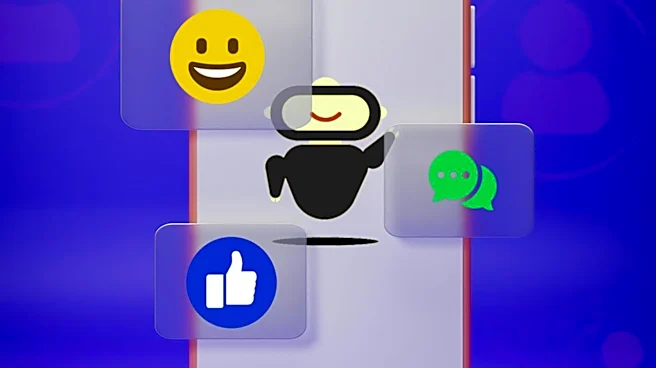
Chatbots are increasingly being integrated into U.S. workplaces, acting as digital assistants that streamline routine conversations, improve access to information, support customers, and help employees complete daily tasks more efficiently. These software
systems, which communicate through text or voice, have evolved from rule-based interactions to modern AI chatbots capable of understanding natural language, interpreting context, and generating responses. Their application spans various departments, including customer service, HR, marketing, sales, and IT support. For instance, a customer service chatbot can handle frequently asked questions, allowing human agents to focus on complex issues. Similarly, internal chatbots can answer employee queries about company policies or IT troubleshooting, reducing the time spent on repetitive searches. The effectiveness of these chatbots, however, is highly dependent on the quality of the surrounding system, including reliable information, clear workflows, appropriate permissions, and human escalation mechanisms. This shift is making software more conversational and moving routine interactions from human employees to AI-powered systems, thereby changing the nature of many tasks rather than eliminating entire roles.
Why It's Important?
The widespread adoption of chatbots in the U.S. workplace signifies a significant shift in how businesses operate, impacting productivity, customer relations, and employee roles. By automating repetitive tasks, chatbots free up human employees to concentrate on activities requiring judgment, creativity, and complex problem-solving, potentially leading to higher job satisfaction and more strategic output. This technology can also improve customer response times and provide consistent information, enhancing the overall customer experience. For industries, this means a potential reduction in operational costs associated with routine inquiries and an increase in efficiency. However, the implementation of chatbots also presents challenges. Poorly designed or inadequately supported chatbots can lead to inaccurate information, security risks, and employee frustration. The reliance on these systems necessitates robust security controls, accurate data, and clear guidelines for human intervention to prevent misuse and ensure trustworthy AI interactions. The integration of chatbots also redefines job responsibilities, requiring employees to adapt to new collaborative models with AI tools.
What's Next?
The future of chatbots in the U.S. workplace is expected to involve deeper integration with existing business systems and the evolution into more sophisticated AI assistants. These advanced assistants will likely perform multiple tasks without constant human supervision, such as reading emails, summarizing content, drafting responses, and scheduling appointments. Companies like Microsoft and Google are already embedding intelligent functions into their productivity suites, indicating a trend towards more autonomous AI agents. This transition will require businesses to focus on robust governance frameworks, including continuous risk management, performance measurement, and problem resolution throughout the AI system lifecycle. Furthermore, there will be an ongoing need for employee training to effectively collaborate with AI tools, understanding their capabilities and limitations. The development of more specialized AI assistants, voice-based interactions, and automated workflows will continue to shape the workplace, emphasizing the balance between human judgment and AI assistance.
Beyond the Headlines
The increasing reliance on chatbots in the workplace raises several deeper implications beyond immediate productivity gains. Ethically, the design of these systems must address biases in their training data, as evidenced by studies showing AI models can perpetuate existing inequalities in recommendations, favoring certain demographics or established experts. This bias can impact professional opportunities and access to information. Legally, the use of chatbots, especially those handling sensitive data, necessitates stringent privacy and security protocols to prevent cyberattacks and data breaches. The potential for AI to generate plausible but incorrect information, often termed 'hallucinations,' also highlights the critical need for human oversight and verification, particularly in high-stakes scenarios like financial or medical advice. Culturally, the shift towards conversational software may alter human interaction dynamics, potentially leading to increased loneliness or reduced real-world socialization if over-reliance on AI replaces human connection. The long-term impact on critical thinking skills, as individuals may increasingly accept AI-generated answers without scrutiny, also warrants careful consideration and educational initiatives.