




What's Happening?
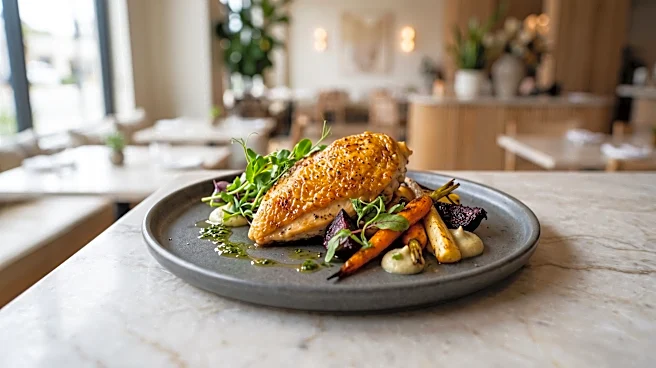
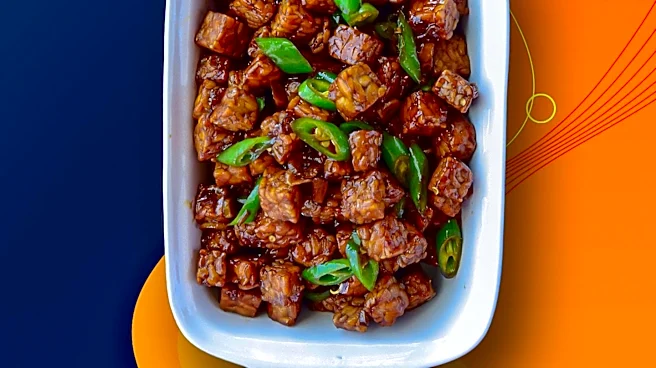
Upside Foods, a pioneer in the cultivated meat industry, has successfully brought its lab-grown chicken to commercial availability in several California restaurants and dining programs. Consumers can now order dishes featuring Upside Korean Popcorn Chicken
at Chimmelier in Los Angeles, Southern Fried Upside Chicken at Epic Steak in San Francisco, and a cultivated barbecue chicken sandwich at Mersea on Treasure Island. This milestone comes after years of development and significant challenges in scaling production and reducing costs. Founded in 2015 by Uma Valeti, MD, Upside Foods has overcome initial hurdles, including a production cost of $9,000 per pound in 2017, to make its product accessible at competitive prices. The company has expanded its production capacity to over one million pounds of cultivated chicken annually, utilizing new 20,000-liter cultivator tanks.
Why It's Important?
The commercial launch of Upside Foods' cultivated chicken marks a pivotal moment for the alternative protein industry, demonstrating the viability of lab-grown meat beyond experimental stages. This development challenges the long-held assumption that meat consumption requires animal slaughter, offering a more sustainable and ethical alternative. According to Upside Foods, their method can produce one million pounds of chicken on just half an acre of land, significantly reducing the environmental footprint compared to conventional meat production. The involvement and endorsement of esteemed chefs like Thomas Keller and Nancy Silverton further validate the product's culinary quality and potential to integrate into high-end dining. This success provides renewed hope for the cultivated meat sector, which has seen some companies cease operations in recent years, signaling a potential shift in how meat is produced and consumed globally.
What's Next?
With cultivated chicken now available in select California establishments, the next steps for Upside Foods and the broader cultivated meat industry will likely focus on expanding distribution and increasing production efficiency to lower costs further. The company's success in scaling production to over one million pounds annually is a critical step towards wider market penetration. Future efforts will involve securing more restaurant partnerships, potentially entering retail markets, and navigating regulatory landscapes in other states and countries. Continued innovation in bioreactor technology and cell culture media will be essential to achieve price parity with conventional meat. The industry will also need to address consumer education and acceptance to ensure sustained growth and mainstream adoption of cultivated meat products.
Beyond the Headlines
The commercialization of cultivated chicken by Upside Foods represents more than just a new food product; it signifies a potential paradigm shift in the global food system. This innovation addresses critical issues such as food security, animal welfare, and environmental sustainability on a large scale. The ability to produce meat without raising and slaughtering animals could drastically reduce land use, water consumption, and greenhouse gas emissions associated with traditional livestock farming. Furthermore, it opens avenues for creating a more resilient food supply chain less susceptible to disease outbreaks and climate-related disruptions. The collaboration with renowned chefs also highlights the culinary potential of cultivated meat, suggesting it can meet the high standards of taste and quality demanded by discerning consumers, thereby paving the way for its acceptance in diverse culinary traditions.