



What's Happening?
Volvo Cars is implementing Hexagon Robotics’ AEON humanoid robots at its manufacturing facility in Ghent, Belgium. These wheeled robots are being used for imitation-learning trials, with the goal of integrating them into live production by mid-2027. The initial
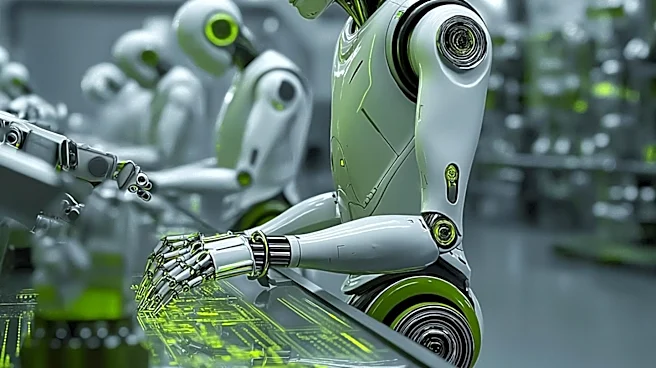
task for the AEON robots involves picking up a component and precisely placing it into one of two fixtures. Volvo's team is training the robots by demonstrating the tasks. The AEON robot is 1.65 meters tall, weighs 60 kilograms, and can carry 10 kilograms. Its design, featuring both legs and wheels, allows for speed, energy efficiency, and mobility across various terrains, including stairs. The human-shaped upper body is intended to enable the AEON to work alongside human employees and existing automation systems, focusing on repetitive tasks that are physically demanding for humans. A broader pilot program with more robots is scheduled for the first half of 2027.
Why It's Important?
The deployment of AEON humanoids by Volvo Cars signifies a significant step in the integration of advanced robotics into automotive manufacturing. This initiative aims to enhance efficiency and address labor challenges by automating repetitive and physically strenuous tasks, potentially leading to improved worker safety and productivity. The ability of these robots to work alongside human employees and existing automation suggests a collaborative future for human-robot interaction in industrial settings. If successful, this model could be adopted by other U.S. and international manufacturers, transforming production lines and potentially reducing operational costs. The focus on imitation learning also highlights a growing trend in robotics towards more intuitive and adaptable training methods, which could accelerate the adoption of humanoid robots across various industries. The success of this pilot could influence investment and development in humanoid robotics, impacting the broader manufacturing sector.
What's Next?
Volvo Cars plans to expand the pilot program with additional AEON robots in the first half of 2027, with the ultimate goal of integrating them into live production by mid-2027. Future developments will involve observing how AEON handles a wider variety of parts, navigates the plant environment, and interacts with existing equipment. The success of these trials will determine the extent of humanoid robot deployment within Volvo's operations and potentially influence other automotive manufacturers. The broader implications include continued advancements in physical AI models and data ingestion for robot learning, which could lead to more sophisticated and reliable humanoid robots capable of performing complex tasks. The Humanoid Technology Expo 2027 in Germany is expected to showcase further innovations and collaborations in this rapidly evolving field.
Beyond the Headlines
The integration of humanoid robots like AEON into manufacturing raises deeper questions about the future of work and the evolving relationship between humans and machines. While the immediate goal is to alleviate physically demanding tasks, the long-term implications could include a significant shift in workforce composition and skill requirements. Ethical considerations regarding job displacement, the need for retraining programs, and the psychological impact of working alongside advanced robots will become increasingly relevant. The development of robots capable of imitation learning also points to a future where machines can adapt and learn from human actions, blurring the lines between human and artificial intelligence in practical applications. This trend could lead to new forms of human-robot collaboration, requiring a re-evaluation of industrial design, safety protocols, and even the legal frameworks governing autonomous systems in the workplace.