





What's Happening?
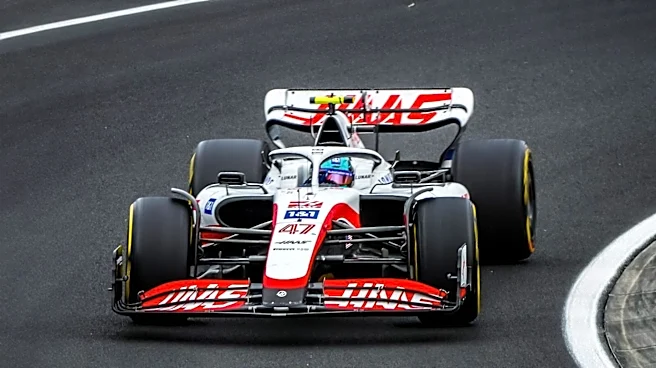
Guenther Steiner, the former team principal for the Haas F1 team, recently stated on the High Performance podcast that he believes he stayed with the team two years longer than he should have. Steiner, who departed from his role in January 2024 following
disagreements over the team's strategic direction, suggested that team owner Gene Haas may have lost interest in Formula 1. According to Steiner, the team has consistently struggled to move beyond the lower midfield since its debut in 2016, never achieving a championship finish higher than seventh. He expressed that his ambition to compete for podiums was not aligned with the team's apparent lack of drive to achieve such results, leading to his regret over not leaving sooner.
Why It's Important?
This development is significant for the U.S. presence in Formula 1, as Haas F1 is the only American-owned team in the sport. Steiner's comments highlight potential underlying issues within the team's leadership and ambition, which could impact its long-term competitiveness and appeal. A perceived lack of interest from the owner, Gene Haas, could deter future investment, talent acquisition, and overall performance, potentially diminishing the team's standing in a highly competitive global sport. For American motorsport fans and sponsors, the team's struggles and internal discord raise questions about its future viability and its ability to represent the U.S. effectively on the international stage. The situation underscores the challenges of sustaining a competitive F1 team without a clear, shared vision for success.
What's Next?
Following Steiner's departure and his recent remarks, the Haas F1 team will likely face increased scrutiny regarding its strategic direction and commitment to competitive performance. The current team principal, Ayao Komatsu, will be under pressure to demonstrate a clear path forward and potentially address the concerns raised by Steiner about the team's ambition. Future performance in upcoming seasons will be critical in determining whether Gene Haas's alleged waning interest translates into further stagnation or if new leadership can re-energize the team. Stakeholders, including sponsors and fans, will be watching closely for any signs of renewed investment or a shift in competitive strategy to elevate Haas F1 beyond its current midfield position.
Beyond the Headlines
Steiner's candid reflections on his time at Haas F1 touch upon broader themes within professional sports, particularly the tension between ownership's financial interests and a team's competitive aspirations. His experience highlights how a misalignment in vision between leadership and management can impede progress, even in a high-profile sport like Formula 1. The narrative also raises questions about the sustainability of teams that may prioritize participation over aggressive pursuit of victory. This situation could serve as a case study for other sports franchises on the importance of clear objectives, consistent investment, and a unified vision from top to bottom to achieve sustained success and retain key talent.