






What's Happening?
AIRO Group Holdings, Inc., a U.S.-based aerospace and defense company, announced that its subsidiary, Sky-Watch A/S, has secured a framework agreement with the NATO Support and Procurement Agency (NSPA). This agreement, awarded through NSPA's AGS & UAS
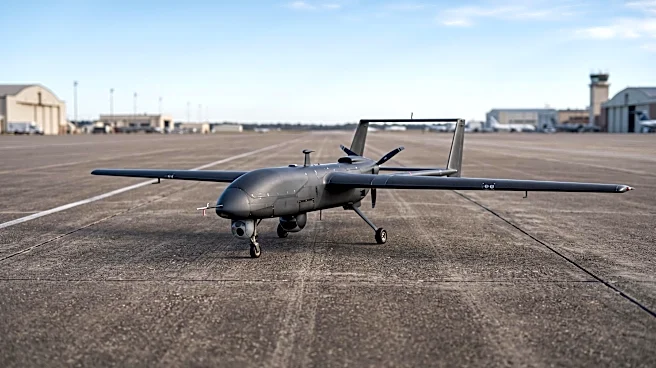
Programme on behalf of the UAS Partnership, will allow member nations to acquire the RQ-35 unmanned aircraft system (UAS) through a streamlined procurement process. The RQ-35 Heidrun is a battle-tested UAS designed for intelligence, surveillance, target acquisition, and reconnaissance (ISR) missions in contested environments. It is a hand-launched platform offering up to 2.5 hours of endurance and optional onboard AI capabilities, capable of rapid deployment by a single operator. This development comes as NATO members continue to increase their investments in unmanned ISR and situational awareness technologies, highlighting the competitive position of the RQ-35 in the defense market. The agreement is expected to expand AIRO's access to UAS Partnership member nations and create new opportunities for the RQ-35 platform, supporting the company's long-term revenue growth strategy in international markets.
Why It's Important?
This agreement is significant for AIRO Group Holdings as it substantially expands its market access within NATO allied defense markets, aligning with the company's international growth strategy. For NATO member nations, the framework agreement provides a more efficient and direct pathway to acquire advanced unmanned aerial systems, which are crucial for modern intelligence, surveillance, and reconnaissance operations. The RQ-35's proven capabilities in contested environments address a critical need for enhanced situational awareness and tactical unmanned capabilities among allied forces. This streamlined procurement process can accelerate the deployment of essential defense technologies, potentially strengthening the collective security posture of NATO. The increased investment by NATO members in unmanned systems also signals a broader trend in defense modernization, where AI-enabled and autonomous platforms are becoming central to military strategies. This could lead to further opportunities for U.S. defense contractors specializing in advanced aerospace technologies.
What's Next?
Following this framework agreement, NATO nations interested in acquiring the RQ-35 UAS can now directly engage with the UAS Partnership for procurement. AIRO Group Holdings anticipates that this agreement will lead to increased sales and revenue growth as more NATO members leverage the streamlined process. The company plans to pursue additional growth opportunities as the demand for tactical unmanned capabilities continues to rise within the alliance. This could also pave the way for AIRO to introduce other advanced defense solutions to NATO markets. Furthermore, the success of this agreement may encourage other defense technology companies to seek similar framework agreements with NSPA, fostering a more competitive and innovative defense procurement landscape within NATO. The ongoing investment by NATO members in unmanned systems suggests a sustained demand for such technologies, indicating a long-term market for companies like AIRO.
Beyond the Headlines
The NSPA framework agreement for the RQ-35 UAS underscores a broader strategic shift within NATO towards integrating advanced, unmanned, and AI-enabled technologies into its defense architecture. This move reflects a recognition of the evolving nature of modern warfare, where intelligence gathering and reconnaissance in contested environments are paramount. The emphasis on streamlined procurement pathways also highlights an effort to enhance interoperability and standardization among allied forces, ensuring that member nations can rapidly deploy and integrate critical assets. Ethically, the deployment of AI-capable UAS raises questions about autonomous decision-making in combat and the need for robust ethical guidelines in the development and use of such technologies. Legally, these agreements simplify cross-border defense procurement, but also necessitate careful consideration of export controls and technology transfer regulations. Culturally, the increasing reliance on unmanned systems may reshape military doctrines and personnel training, requiring new skill sets and operational paradigms for defense forces.