



What's Happening?
Teaching children gratitude through everyday activities supports their emotional development, resilience, and overall happiness. Gratitude is a powerful skill that helps children appreciate people and experiences, leading to stronger relationships and a positive
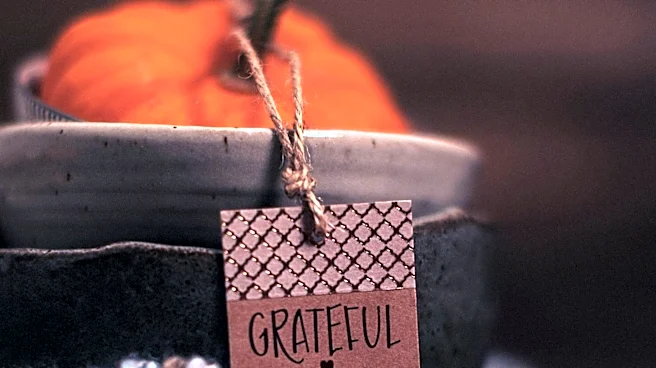
mindset that extends into adulthood. Simple, free activities can foster this skill, such as daily 'gratitude moments' where children share something they are grateful for, drawing pictures of appreciation, or taking 'gratitude walks' to notice positive aspects of their environment. Encouraging children to write or draw 'thank you' notes for acts of kindness and creating a family gratitude jar are also effective methods to build social awareness and strengthen connections.
Why It's Important?
Instilling gratitude in children from a young age has significant long-term benefits for their well-being and societal contributions in the U.S. By developing a positive mindset and stronger emotional resilience, these children are better equipped to navigate life's challenges. This approach can lead to a generation that values empathy, connection, and social responsibility, potentially reducing instances of conflict and fostering more supportive communities. For parents and educators, these simple activities offer practical, accessible tools to integrate character development into daily routines without requiring significant resources, making it a valuable investment in the future emotional health of the nation's youth.
What's Next?
Parents and educators can continue to implement and adapt these simple gratitude practices to suit different age groups and family dynamics. Consistency is key, making gratitude a natural part of daily conversations and routines. For instance, incorporating 'gratitude moments' during dinner or bedtime, or using gratitude activity sheets for visual learners, can reinforce the practice. The family gratitude jar offers a tangible way to track and celebrate positive experiences collectively. Ongoing efforts should focus on making these practices engaging and meaningful, ensuring children understand the 'why' behind gratitude, which will help them internalize the skill and apply it authentically throughout their lives.
Beyond the Headlines
The emphasis on simple, free activities for teaching gratitude highlights a broader trend towards accessible and holistic approaches to child development. This contrasts with more complex or resource-intensive interventions, making gratitude education equitable across various socioeconomic backgrounds. The act of noticing and valuing one's environment, as encouraged by 'gratitude walks,' also subtly promotes mindfulness and an appreciation for nature, which can have additional benefits for mental well-being. Furthermore, encouraging 'thank you' notes not only teaches appreciation but also develops early literacy and communication skills, demonstrating how gratitude practices can serve multiple developmental goals simultaneously. This integrated approach underscores the profound impact of seemingly small, consistent efforts in shaping a child's character and future outlook.