









What's Happening?
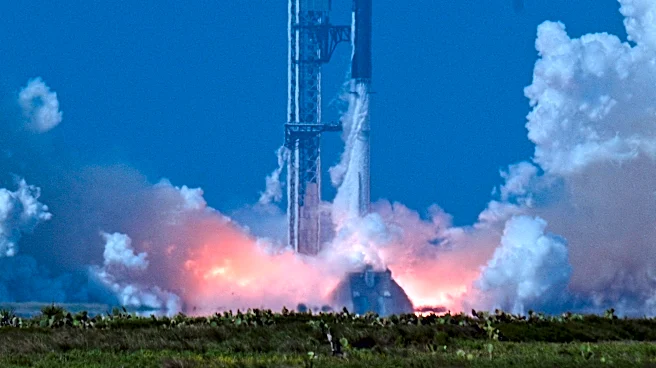
SpaceX is set to conduct its next Starship flight test, known as Flight 13, on July 16 from its Starbase facility in southern Texas. This follows the Federal Aviation Administration's (FAA) closure of its mishap investigation into the previous Starship-Super
Heavy flight test. The upcoming test aims to address issues encountered during Flight 12, where the Super Heavy booster failed to execute engine burns as planned, leading to an unsuccessful splashdown. SpaceX has made hardware modifications to improve engine re-light reliability and updated engine alarms and aborts to better handle multi-engine flight conditions. The test will also involve deploying operational Starlink V3 satellites, marking a shift from using dummy satellites in previous tests.
Why It's Important?
The success of SpaceX's Starship program is crucial for the company's long-term goals, including missions to Mars and the Moon. The improvements made to the Super Heavy booster and the Starship's heat shield are significant steps towards achieving a fully reusable spacecraft, which could drastically reduce the cost of space travel. Additionally, the deployment of operational Starlink satellites during this test highlights SpaceX's commitment to expanding its satellite internet service, which has implications for global internet connectivity. The test's outcome could influence future regulatory approvals and the pace of SpaceX's ambitious space exploration plans.
What's Next?
If successful, Flight 13 will pave the way for more advanced tests, including orbital flights and reentry maneuvers. SpaceX plans to continue refining the Starship's design and performance, with a focus on achieving full reusability. The company will likely analyze data from the upcoming test to make further improvements. Regulatory bodies like the FAA will monitor these developments closely, as they have implications for safety standards in commercial spaceflight. The results of this test could also impact SpaceX's timeline for launching crewed missions and its broader space exploration objectives.
Beyond the Headlines
The advancements in SpaceX's Starship program could have broader implications for the aerospace industry, potentially setting new standards for spacecraft reusability and cost-efficiency. The integration of Starlink satellites into the test also underscores the growing intersection between space exploration and telecommunications. As SpaceX continues to push the boundaries of space technology, it may influence policy discussions around space traffic management and the environmental impact of increased satellite deployments. The success of these tests could also inspire further investment in space technology and innovation.