









What's Happening?
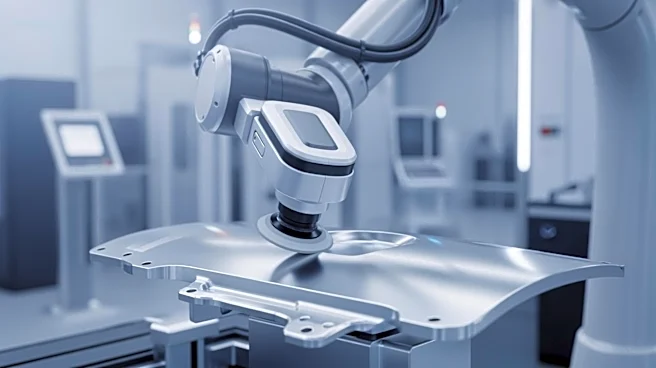
GrayMatter Robotics is addressing workforce shortages in defense manufacturing by deploying autonomous surface-finishing systems. These systems are designed to handle the variability in surface conditions found in depot-level maintenance, which traditional
automation struggles with. The U.S. military's readiness has been impacted by a shortage of trained maintenance workers, as highlighted in a 2025 report by the Government Accountability Office. GrayMatter's systems, which operate in air-gapped facilities to meet data sovereignty requirements, are part of a broader effort to enhance production capacity without extending training timelines. The company has partnered with Huntington Ingalls Industries and Path Robotics to integrate physical AI into shipbuilding programs, aiming to build autonomous assembly lines for ship and submarine construction.
Why It's Important?
The introduction of autonomous systems in defense manufacturing is crucial due to the significant workforce shortfall, which has affected military readiness. By automating surface preparation and finishing, GrayMatter Robotics is helping to mitigate the impact of retiring skilled technicians and the slow pace of training new workers. This technological advancement not only addresses immediate labor shortages but also enhances the efficiency and consistency of maintenance processes. The ability to handle variable surface conditions without manual intervention represents a significant leap in manufacturing capabilities, potentially leading to faster deployment and improved operational readiness of military assets.
What's Next?
The continued integration of AI and autonomous systems in defense manufacturing is likely to expand, with further collaborations and innovations expected. As the U.S. military and defense contractors seek to overcome workforce challenges, the adoption of such technologies could become more widespread. Future developments may include the refinement of these systems to handle even more complex tasks and the exploration of additional applications within the defense sector. Stakeholders will likely monitor the performance and impact of these systems closely, potentially influencing procurement and training strategies.