

What's Happening?
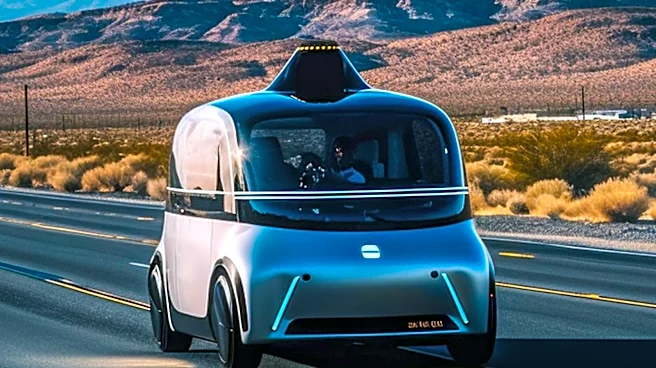
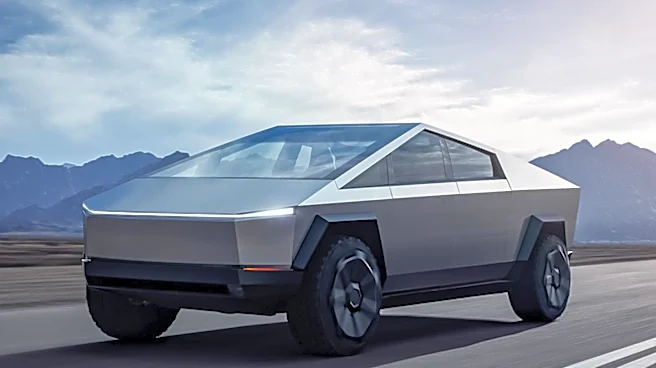
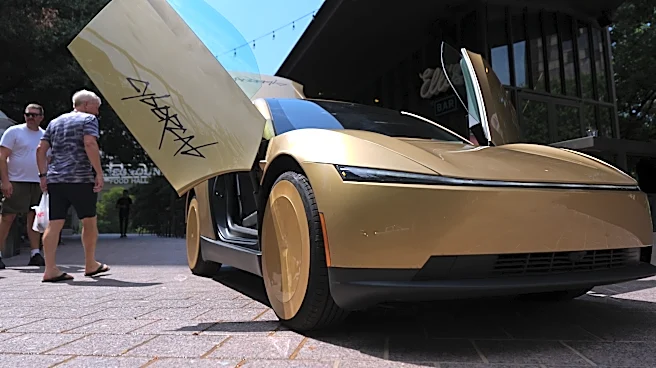
Tesla Inc. shares experienced a decline of approximately 3% in premarket trading following the launch of its Cybercab robotaxi service. The Wall Street Journal business columnist Tim Higgins characterized the event as 'less of a storm and more of a drizzle,'
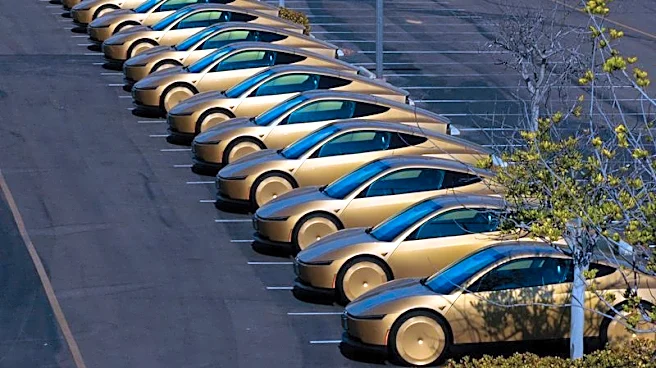
contrasting it with Elon Musk's earlier promise of a 'storm' of robotaxis. Despite the muted reception, Higgins acknowledged the significance of deploying Cybercabs on Austin streets without human drivers. Musk had generated considerable anticipation for the launch, with around two million people reportedly awaiting a livestream on X that ultimately did not occur. Instead, Tesla conducted a closed event in Austin, officially integrating its purpose-built Cybercab into its Robotaxi network and offering rides to the public in select areas of the city. Tesla executives outlined plans for dynamic ride pricing, aiming to provide a 'first-class experience at coach price.' Texas records indicated 45 Cybercabs were registered prior to the launch, but Tesla provided limited details on how quickly this fleet would expand to the larger scale Musk had previously envisioned. Higgins concluded that the launch 'did probably not live up to the hype.'
Why It's Important?
The reception of Tesla's Cybercab launch is significant as it reflects on the company's ability to deliver on ambitious promises in the autonomous vehicle sector. The initial market reaction, with a 3% drop in share price, indicates investor skepticism regarding the immediate scalability and impact of the Cybercab service. Tesla's strategy of relying primarily on cameras for its autonomous driving system, in contrast to competitors like Waymo and Zoox that utilize lidar, represents a substantial technological bet. If Tesla can prove the reliability and scalability of its camera-based system, its manufacturing capabilities could provide a significant advantage in rapidly deploying a large fleet of robotaxis. However, the current challenges in demonstrating this reliability could hinder widespread adoption and regulatory approval, impacting Tesla's long-term vision for autonomous mobility. The success or failure of this approach will have broader implications for the autonomous vehicle industry, potentially influencing future technological development and investment strategies across the sector.
What's Next?
Tesla's immediate challenge is to demonstrate the reliable performance of its autonomous driving system to support a significantly larger Cybercab fleet. The company will need to provide clearer timelines and strategies for scaling up the number of operational Cybercabs beyond the initial 45 registered vehicles. The ongoing performance of the camera-based autonomy system in real-world conditions in Austin will be closely monitored by industry experts, investors, and regulators. Should the technology prove consistently effective, Tesla's manufacturing capacity could enable rapid expansion. Conversely, persistent challenges could force Tesla to re-evaluate its approach, although a shift away from its camera-centric system, as noted by Higgins, would be 'very surprising' given the deep integration of this technology. Future developments will likely include updates on fleet expansion, operational performance metrics, and any regulatory hurdles encountered as Tesla seeks to broaden its robotaxi service.
Beyond the Headlines
The Cybercab launch highlights a fundamental debate within the autonomous vehicle industry regarding the optimal sensor suite for self-driving cars. Tesla's commitment to a vision-only system, based on the premise that humans drive using vision, represents a bold, first-principles engineering approach. This contrasts with the more common industry practice of integrating multiple sensor types, including lidar, for redundancy and enhanced perception. The success of Tesla's camera-based strategy could validate a more cost-effective and scalable pathway to full autonomy, potentially disrupting the competitive landscape. However, if the camera-only approach continues to face significant hurdles in achieving the necessary reliability and safety standards, it could reinforce the industry's reliance on multi-sensor fusion. This technological divergence also carries ethical and legal implications, particularly concerning liability in the event of accidents and the public's trust in purely vision-based autonomous systems. The long-term outcome of Tesla's bet will shape not only its own future but also the broader trajectory of autonomous transportation.