

What's Happening?
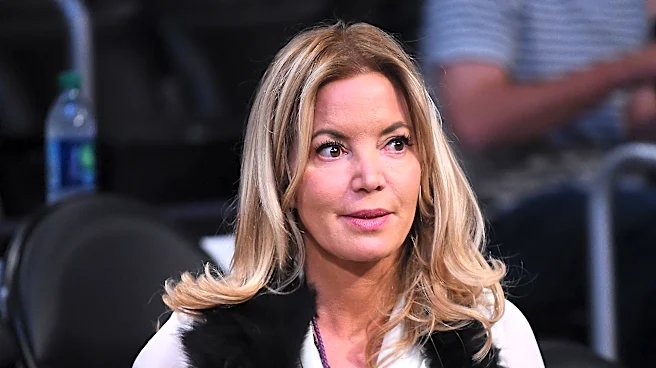
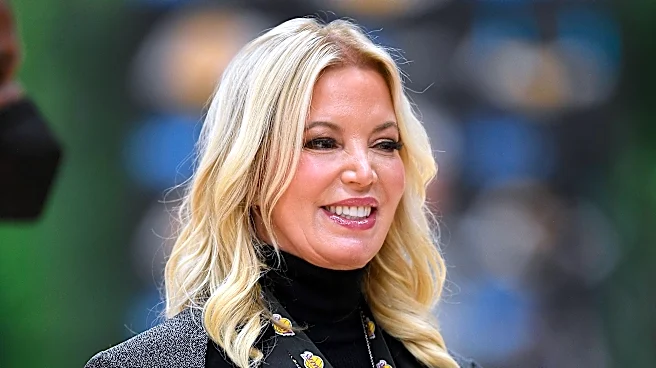
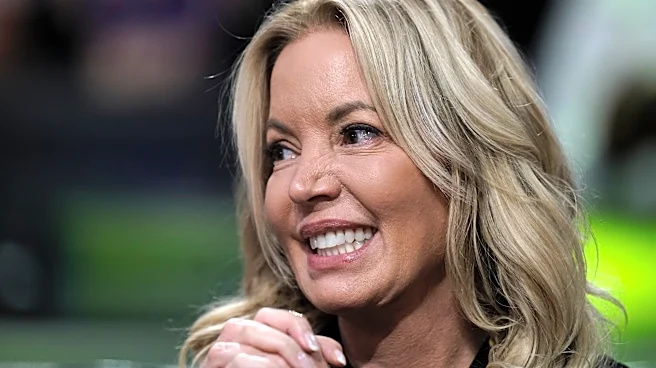
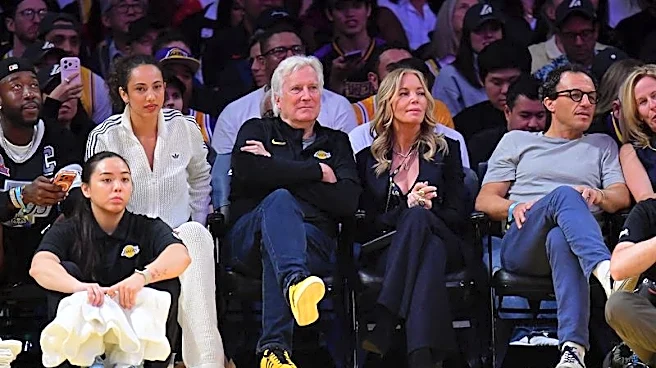
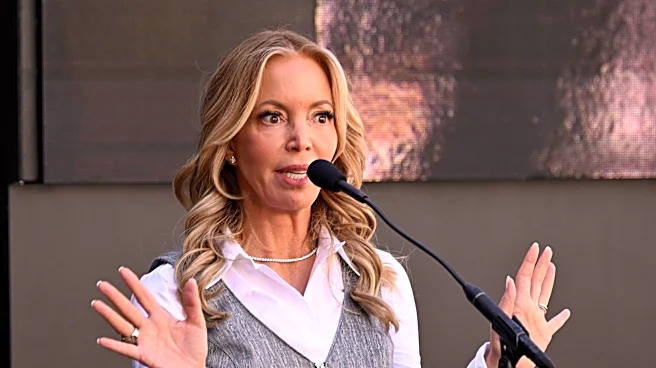
Jeanie Buss, the current governor of the Los Angeles Lakers, is involved in a legal dispute with her family over the sale of their remaining shares in the franchise. This comes after Mark Walter sold his majority stake to Bob Iger and Josh Kushner, and the Buss family subsequently
voted to sell their shares to the same duo. Jeanie Buss is contesting this vote, aiming to maintain her position as governor. To remain governor of an NBA team, an individual must own at least 15% of the team. The Buss siblings collectively own 17.8% of the Lakers. According to Sam Amick and Dan Woike of The Athletic, Buss is open to purchasing her siblings' shares to secure the necessary 15% ownership. This situation is described as a significant source of drama within the NBA, alongside the L.A. Clippers Aspiration scandal.
Why It's Important?
This ownership struggle has significant implications for the Los Angeles Lakers franchise and the broader NBA. The stability of team leadership is crucial for long-term planning, team performance, and fan confidence. A protracted legal battle could create uncertainty for the team's operations, even if daily activities at the Lakers facility are currently unaffected. The outcome will determine who holds ultimate control over one of the NBA's most iconic franchises, potentially influencing future strategic decisions regarding player acquisitions, coaching staff, and overall team direction. The willingness of Jeanie Buss to buy out her family's shares highlights the high stakes involved in maintaining control of a major sports entity, demonstrating the personal and financial investment tied to such positions. This situation also underscores the complexities of family-owned businesses, especially when significant assets like professional sports teams are involved.
What's Next?
The legal battle over the Lakers' ownership is expected to be a complex and lengthy process, potentially extending into the 2026-27 NBA season. Jeanie Buss will need to find a way to acquire at least 15% of the team's shares to retain her governorship, which could involve purchasing her siblings' portions. It remains uncertain whether Bob Iger and Josh Kushner, the new majority stakeholders, would support Buss's efforts to consolidate her ownership. The resolution of this dispute will ultimately determine the leadership structure of the Lakers. While the ownership struggle unfolds, the team's on-court activities are reportedly continuing as usual. The situation will be closely watched by NBA observers, as it could set precedents for ownership transitions and family disputes within professional sports leagues.
Beyond the Headlines
The ongoing ownership dispute within the Buss family for control of the Los Angeles Lakers delves into deeper themes of legacy, power, and the evolving landscape of professional sports ownership. The Buss family has been synonymous with the Lakers for decades, and this internal conflict represents a potential shift in that long-standing tradition. The requirement for an NBA governor to hold a minimum 15% stake highlights the league's emphasis on significant personal investment and stability in leadership. This situation also brings to light the challenges faced by family-owned enterprises in navigating generational transitions and differing visions among heirs. The outcome could influence how other long-standing family-owned sports franchises approach succession planning and internal governance, potentially leading to more formalized agreements or preemptive measures to avoid similar public disputes. It underscores the blend of business, personal relationships, and public image inherent in owning a high-profile sports team.