
What's Happening?
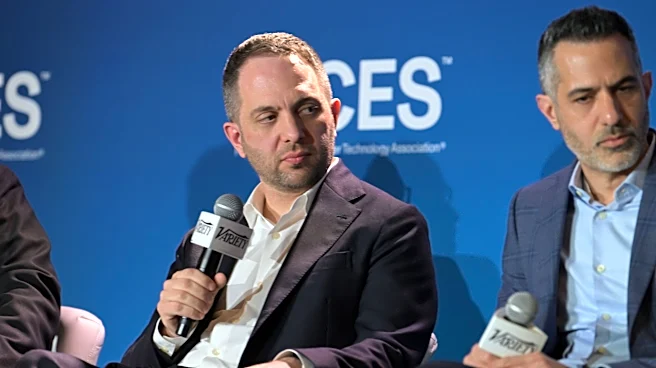
Motional, Hyundai Motor Group’s U.S.-based autonomous driving subsidiary, faces a critical test at the upcoming CES 2027 tech fair in January. The company needs to deliver a compelling demonstration of
its self-driving technology to restore investor confidence in Hyundai's long-term technology strategy. Hyundai Motor's stock has seen a significant decline, dropping approximately 68 percent from its June peak, reflecting fading investor trust due to weakening earnings growth and delayed progress in self-driving technology. The automaker's cumulative operating profit for the first nine months of the year fell 17.7 percent, with sales also declining. This performance is attributed to sluggish sales in Europe and Korea, rising U.S. investment costs, and increased competition from Chinese automakers. Motional's demonstration must showcase tangible progress in real-world driving capabilities, safety, and commercial scalability to differentiate itself from competitors like Tesla and emerging Chinese EV makers.
Why It's Important?
The upcoming CES 2027 demonstration by Motional is crucial for Hyundai Motor Group's standing in the competitive autonomous vehicle market and its overall financial health. A successful showing could revive investor interest and validate Hyundai's substantial investments in future mobility technologies, including robotics and software-defined vehicles. Conversely, a failure to demonstrate a clear competitive advantage could further erode investor confidence, potentially leading to deeper doubts about Hyundai's future growth strategy and further declines in its stock value. The company is under pressure to prove that its technology can translate into a commercially viable business, especially as rivals like Tesla continue to advance their Full Self-Driving (FSD) technology and other automakers like BMW introduce advanced driver assistance systems. The outcome will significantly influence how Hyundai is perceived in the global automotive industry and its ability to compete in the evolving landscape of autonomous transportation.
What's Next?
Following the CES 2027 demonstration, Motional will likely face intense scrutiny from investors and industry analysts regarding the commercial viability and scalability of its autonomous driving technology. The company will need to articulate a clear path to market differentiation and operational cost reduction to satisfy investor demands. Hyundai Motor Group will also need to address its broader financial performance, particularly in key markets, to stabilize its core automotive business while continuing to invest in future technologies. The competitive landscape is expected to intensify, with ongoing advancements from Tesla and other players, requiring Motional to consistently demonstrate innovation and practical application of its technology. Future announcements regarding partnerships, deployment plans, and further technological milestones will be critical in shaping market perception and investor sentiment.
Beyond the Headlines
The challenges faced by Motional and Hyundai Motor Group highlight broader industry trends and the immense capital required for autonomous vehicle development. The pressure to deliver tangible results at CES 2027 underscores the high stakes involved in the race for self-driving dominance, where technological prowess must be coupled with commercial viability. This situation also reflects a shift in investor priorities, moving beyond mere technological promises to demand clear evidence of profitability and market differentiation. The struggle to justify significant investments in future mobility against a backdrop of declining core business performance is a common dilemma for traditional automakers. Furthermore, the emphasis on 'real-world driving capabilities, safety and commercial scalability' points to the evolving maturity of the autonomous vehicle sector, where practical deployment and public trust are becoming as important as technological breakthroughs.