


What's Happening?
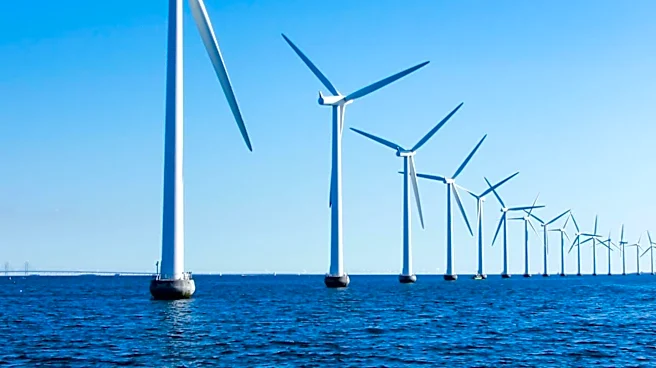
Ørsted, a leading offshore energy company, has reported a delay in the grid connection for its Hornsea 3 offshore wind project. The National Grid informed Ørsted of a potential delay of up to two months for the onshore connection, pushing the commissioning
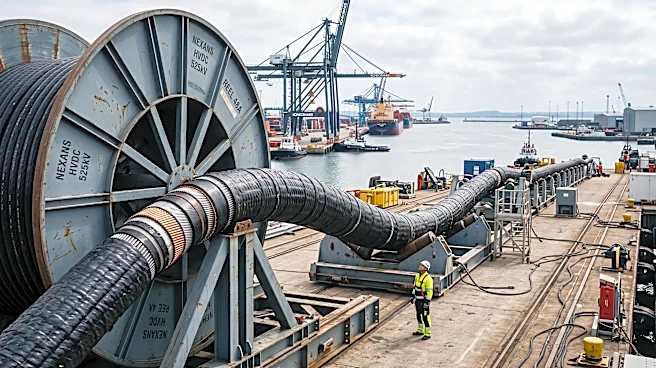
target for the 2.9GW project to Q4 2027 or Q1 2028. As of H1 2026, the project was approximately 30% complete. This delay highlights broader issues within the renewable energy sector, particularly concerning the long lead times for high-voltage direct current (HVDC) export cables, which currently range from 36 to 48 months. Major cable manufacturers like Prysmian and NKT have substantial backlogs, indicating that orders placed in 2027 may not be delivered until around 2030. Additionally, new cable-lay vessel capacity is not expected until 2029, further exacerbating supply chain constraints.
Why It's Important?
The delay in the Hornsea 3 project underscores significant challenges facing the U.S. and global renewable energy industry, particularly in offshore wind development. Extended lead times for critical components like HVDC cables and specialized vessels can disrupt project timelines, increase costs, and potentially slow down the transition to renewable energy. For the U.S., where offshore wind is a growing sector, these supply chain bottlenecks could impact the feasibility and economic viability of future projects. Developers face increased financial risks due to prolonged construction periods and the need to retain specialized teams on standby, which can cost approximately £50,400 per week for a 12-person HV commissioning team. These delays also affect energy security goals and climate targets, as the deployment of renewable capacity is pushed back. The situation highlights the need for strategic investments in manufacturing capacity and infrastructure to support the rapid expansion of offshore wind.
What's Next?
The immediate consequence for Ørsted's Hornsea 3 project is a revised commissioning schedule, now targeting late 2027 or early 2028. This delay will necessitate adjustments in project planning, resource allocation, and potentially contractual agreements. For the broader offshore wind industry, these delays are likely to continue, with no significant easing of cable supply expected in 2027. Developers will need to factor in longer lead times for critical components and potentially higher costs when planning new projects. Regulatory bodies and governments may need to explore incentives or policies to accelerate manufacturing capacity for subsea cables and specialized vessels. The situation could also lead to increased demand for flexible hiring models, where specialized teams are engaged on standby terms rather than fixed start dates, to mitigate the financial impact of project delays.
Beyond the Headlines
The challenges faced by the Hornsea 3 project reveal a systemic issue within the rapidly expanding renewable energy sector: the infrastructure and supply chain are struggling to keep pace with demand. This isn't merely a logistical problem; it has profound implications for global climate goals and energy independence. The reliance on a limited number of manufacturers for specialized components like HVDC cables creates a single point of failure for numerous projects worldwide. This situation could trigger a re-evaluation of supply chain resilience in critical green technologies, potentially leading to increased domestic manufacturing initiatives in countries like the U.S. to reduce dependency on overseas suppliers. Furthermore, the financial burden of delays, including the cost of retaining specialized personnel, could influence investment decisions and project financing models, potentially favoring projects with more secure supply chains or those that can absorb higher contingency costs. The long-term shift could be towards more integrated supply chains and greater collaboration between developers, manufacturers, and governments to de-risk large-scale renewable energy projects.