






What's Happening?
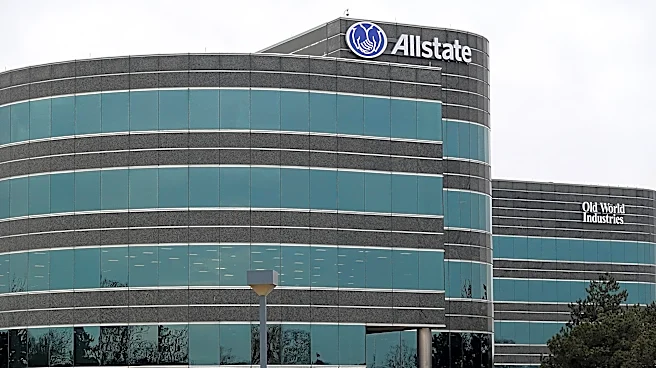
Allstate CEO Tom Wilson announced that the company plans to introduce a Personal Agentic Assistant (PAA) for customers in early 2027. This PAA, which has been under development for over a year, will utilize Allstate’s Large Language Intelligent Ecosystem
(ALLIE). ALLIE is described as ingesting code at a significantly higher rate than in previous months. The insurer has already deployed a customer service agent named Ask Allstate, which handles various customer inquiries. The upcoming PAA aims to provide customers with more value by offering a machine-driven option for transactions, catering to those who prefer not to interact with agents or websites directly. Wilson emphasized that the foundational technology and algorithms for the PAA are already in place and undergoing testing. The PAA will also be designed to work collaboratively with other existing PAAs, such as Muse, indicating a broader strategy for AI integration within the customer service landscape.
Why It's Important?
The introduction of Allstate's Personal Agentic Assistant signifies a major shift in how insurance companies may interact with their customers, potentially redefining customer service expectations in the industry. By offering an AI-driven option for transactions, Allstate aims to capture a segment of consumers who prefer automated interactions, thereby expanding its reach beyond traditional channels like exclusive agents, independent agents, and direct-to-consumer models. This move could lead to increased efficiency and reduced operational costs for Allstate, as routine transactions are handled by AI, freeing up human agents for more complex cases. For consumers, it offers convenience and speed, potentially improving satisfaction for those who value quick, self-service options. However, it also raises questions about the balance between automation and personalized human interaction, and how this will impact customer loyalty and the role of human agents in the long term. The success of this PAA could set a precedent for other insurance providers, accelerating the adoption of similar AI technologies across the sector.
What's Next?
Allstate expects to launch its Personal Agentic Assistant in early 2027, following extensive testing of its foundational technology and algorithms. As the PAA integrates with Allstate's Large Language Intelligent Ecosystem (ALLIE), the company will likely continue to refine its AI capabilities, potentially expanding the range of services the PAA can handle. Allstate also anticipates addressing regulatory, privacy, and cybersecurity concerns as the deployment progresses, indicating a proactive approach to the challenges associated with advanced AI systems. The company's strategy includes marketing to both machines and people, suggesting a dual approach to customer engagement. Furthermore, the PAA is expected to provide context on customer coverage needs, implying future enhancements in personalized service. The broader market will likely observe Allstate's implementation closely, as its success or challenges could influence the pace and direction of AI adoption among other major insurance providers.
Beyond the Headlines
Allstate's venture into Personal Agentic Assistants extends beyond mere customer service automation; it represents a strategic move to position the company at the forefront of AI-driven customer engagement in the insurance sector. This initiative could fundamentally alter the competitive landscape, pushing rivals to accelerate their own AI development to avoid being left behind. The ethical implications of AI handling sensitive customer data, particularly in insurance, will become increasingly prominent, necessitating robust frameworks for data privacy and security. The concept of 'marketing to machines' also introduces a new paradigm, where AI agents might interact with each other to facilitate transactions, raising complex questions about interoperability, data exchange protocols, and potential biases embedded within these systems. This shift could also lead to a re-evaluation of the skills required for future insurance professionals, emphasizing AI oversight, ethical AI development, and complex problem-solving over routine transactional tasks.