





What's Happening?
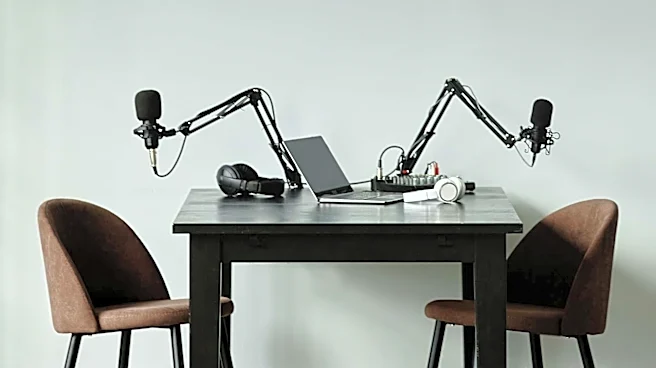
As podcasts increasingly shift from audio-only to video-centric formats, particularly on platforms like YouTube, there's a growing trend among popular shows to design their sets with domestic aesthetics. These professionally designed studios, whether
in at-home settings or production headquarters, aim to create a sense of intimacy and authenticity, making viewers feel like they are part of a private conversation. Examples include the wood-paneled backdrop of Jake Shane’s 'Therapuss,' the 'Northeastern rich girl from the Nineties' aesthetic of 'What We Said,' and the Y2K bedroom style of Owen Thiele’s 'In Your Dreams.' Even high-profile podcasts like Alex Cooper’s 'Call Her Daddy' and Khloé Kardashian’s 'Khloé in Wonder Land' utilize 'luxe living room' designs, while sports podcasts like 'New Heights' feature 'man cave' backdrops. This evolution reflects a desire to make the podcast experience feel more personal and relatable, mimicking the comfort of home.
Why It's Important?
This shift in podcast set design is significant because it reflects a broader cultural desire for authenticity and connection in media consumption. By creating home-like environments, podcasters aim to foster a deeper parasocial relationship with their audience, making the content feel more genuine and less produced. This approach can enhance viewer engagement and loyalty, as audiences feel more personally invited into the hosts' world. For advertisers and brands, these intimate settings offer new opportunities for product placement that feel organic rather than overtly commercial. The trend also blurs the lines between traditional broadcast media and user-generated content, influencing how professional studios are designed and how media personalities present themselves, ultimately shaping the future of digital entertainment and celebrity culture.
What's Next?
The trend of domestic-themed podcast sets is likely to continue evolving, with more shows investing in elaborate, home-like studios. We may see further specialization in aesthetic categories, catering to niche audiences and host personalities. As the market becomes more saturated, podcasters might experiment with even more immersive or interactive set designs to stand out. The success of this approach could also influence other forms of digital content creation, such as live streams and online talk shows, to adopt similar intimate backdrops. Additionally, the increasing professionalization of these 'at-home' studios could lead to new design trends in interior decor, as viewers draw inspiration from their favorite podcasts.
Beyond the Headlines
The adoption of domestic aesthetics in podcast sets delves deeper than mere visual appeal; it taps into fundamental psychological and sociological aspects of human connection. By simulating home environments, podcasters are leveraging the inherent comfort and trust associated with private spaces, creating a perceived intimacy that encourages guests to open up and audiences to feel more connected. This phenomenon reflects a broader societal yearning for authenticity in an increasingly curated digital world. It also subtly reinforces certain cultural ideals of domesticity, often defaulting to idealized, middle-class, and white-coded settings, which can inadvertently exclude or misrepresent diverse lived experiences. The 'performance of authenticity' in these carefully constructed 'home' settings raises questions about the true nature of intimacy in media and how much of what we consume is genuinely spontaneous versus meticulously designed.