

What's Happening?
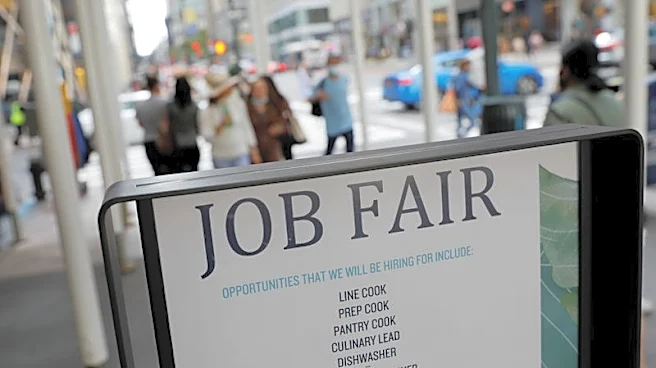
The U.S. non-farm employment figures for July showed a surprising decline of 23,000 jobs, with the unemployment rate decreasing from 4.2% to 4.1%. This unexpected drop suggests challenges in the labor market following a period of strong performance earlier
in the year. The data has led to a decrease in the likelihood of a Federal Reserve interest rate hike in September, now estimated at 40%. The employment figures have also influenced gold prices, which have risen due to reduced expectations of rate increases.
Why It's Important?
The decline in non-farm employment highlights potential vulnerabilities in the U.S. economic recovery, which could have broader implications for consumer spending and economic growth. The labor market's performance is a critical indicator for monetary policy decisions, and the reduced probability of a rate hike reflects concerns about sustaining economic momentum. Rising gold prices indicate investor caution and a shift towards safe-haven assets amid economic uncertainty.
What's Next?
The Federal Reserve's upcoming decisions will be closely watched, as policymakers assess the labor market's health and its implications for inflation and economic growth. Further employment data releases will be critical in shaping expectations for monetary policy and economic forecasts. Investors and businesses will need to navigate potential volatility in financial markets as they respond to evolving economic indicators.