




What's Happening?
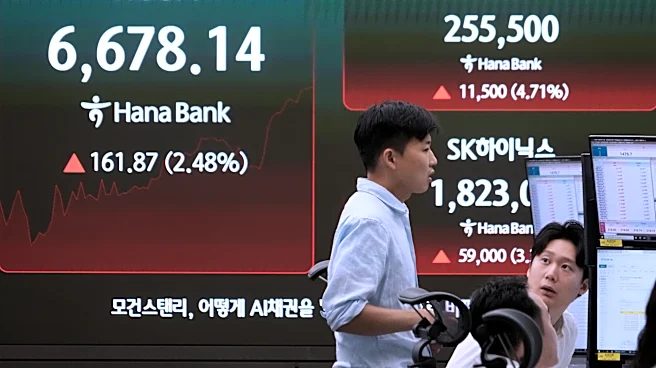
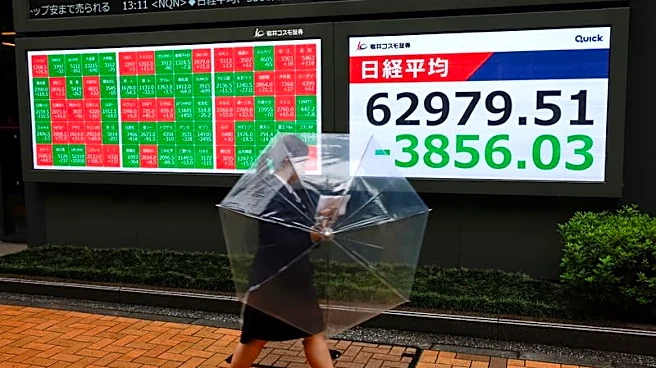
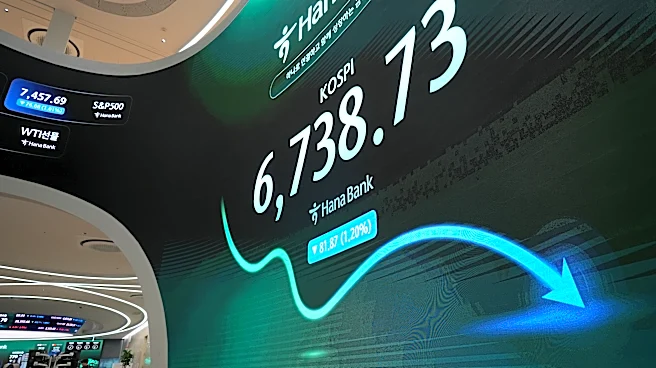
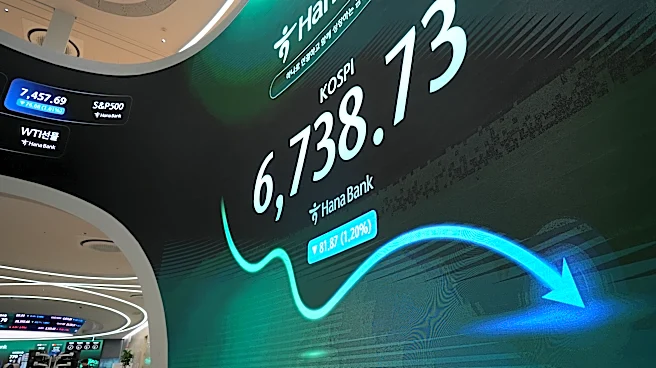
South Korea's stock market, particularly its Kospi index, has experienced significant volatility, dropping around 20% in July. This decline is attributed to profit-taking by investors and a broader deleveraging from semiconductor stocks. Despite this,
the Kospi index has shown a strong performance overall, rising approximately 60% in 2026. Analysts from JPMorgan and other financial institutions suggest that the recent downturn may be nearing its end, with expectations of a recovery. The Kospi's performance is closely watched by U.S. investors due to its exposure to memory stocks, which are integral to the artificial intelligence infrastructure sector.
Why It's Important?
The potential recovery of South Korea's stock market is significant for U.S. markets, as it often serves as an indicator for global trends, especially in the technology sector. A rebound in the Kospi could signal a stabilization in the semiconductor market, which is crucial for the AI industry. This could lead to increased investor confidence and potentially boost U.S. tech stocks. Additionally, the performance of South Korean stocks can influence global investment strategies, impacting U.S. investors who are heavily invested in tech and AI-related sectors.
What's Next?
If the Kospi index stabilizes and begins to recover, it could lead to a renewed interest in tech stocks globally, including in the U.S. Investors will likely monitor the situation closely, looking for signs of sustained growth in the semiconductor sector. Financial institutions may adjust their strategies based on these developments, potentially increasing their exposure to tech stocks. The outcome could also influence U.S. monetary policy and investment flows, as a stable tech market is crucial for economic growth.