


What's Happening?
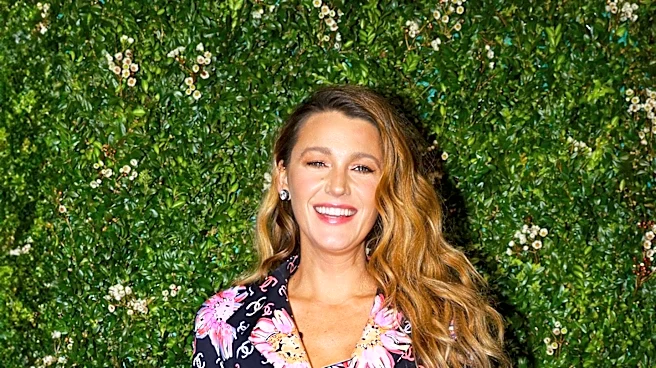
Actress Blake Lively recently shared a selfie on her Instagram Story showcasing a beauty treatment she was undergoing, humorously aiming to look like she's in the 'first trimester of life.' The 39-year-old 'Gossip Girl' actress posted a video of herself
with various sheet and eye masks on her face, accompanied by a red light device on her head. She cheekily captioned the post, set to Fergie and Ludacris's 2006 song 'Glamorous,' with 'Natural beauty is effortless.' Lively also included thought bubbles expressing her dedication to the effort and a nostalgic sentiment for the simpler skincare routines of the 2000s, when 'we just used handsoap with fish characters on it on our face & called it a day.'
Why It's Important?
Blake Lively's social media post offers a glimpse into the beauty routines and self-care practices prevalent among celebrities, often influencing broader consumer trends in the U.S. beauty industry. Her humorous take on the extensive effort required for 'natural beauty' resonates with many who feel pressure to maintain a youthful appearance, highlighting the societal expectations placed on women, particularly in the public eye. The post also taps into a sense of nostalgia for simpler times, which is a recurring theme in consumer culture and can drive demand for retro-inspired products or a return to more basic approaches. For the beauty and wellness market, celebrity endorsements and candid shares like Lively's can significantly impact product visibility and sales, shaping consumer preferences and driving innovation in anti-aging and skincare technologies.
What's Next?
Lively's post is likely to spark discussions among her followers and in beauty communities about the effectiveness and accessibility of such treatments. It may also contribute to the ongoing conversation about beauty standards and the pressures faced by individuals to conform to certain aesthetic ideals. While this specific post is a lighthearted share, it reflects a broader trend of celebrities engaging with their audience on personal care, which can lead to increased interest in the specific products or treatments she uses. The beauty industry will continue to monitor such celebrity interactions for insights into consumer desires and emerging trends, potentially leading to new product developments or marketing strategies that capitalize on these sentiments.
Beyond the Headlines
Beyond the immediate humor and celebrity appeal, Lively's post subtly touches upon deeper cultural themes related to aging, beauty, and authenticity. Her comment about missing the simpler skincare routines of the 2000s reflects a common sentiment of longing for a less complicated past, especially in an era saturated with complex beauty regimens and advanced treatments. This nostalgia can be seen as a commentary on the ever-increasing demands of modern beauty standards and the commercialization of anti-aging. It also highlights the paradox of 'effortless' beauty, which often requires significant time, effort, and financial investment, particularly for public figures. The post, therefore, serves as a relatable moment for many, acknowledging the often-unseen work behind maintaining a public image.