




What's Happening?
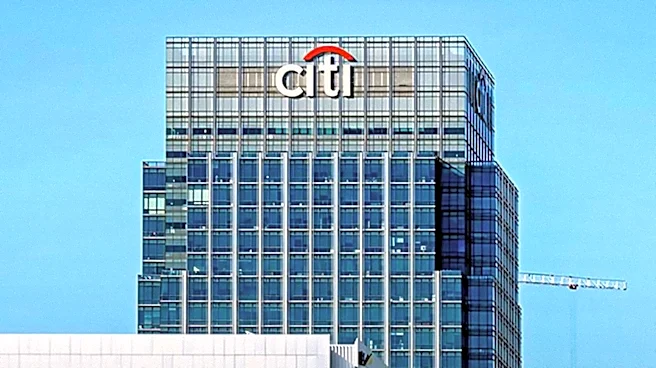
Citigroup Inc. is strategically capitalizing on the global expansion of Chinese corporations and the increasing internationalization of the yuan to drive its foreign exchange and cross-border transaction businesses. Citi's China-related business has experienced
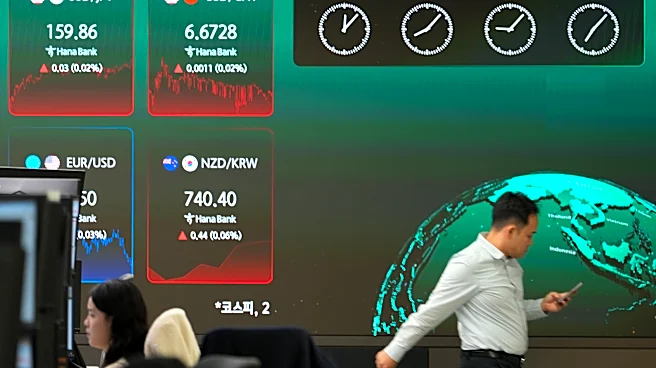
double-digit growth in recent years, making it one of the fastest-growing segments in Asia, according to Marc Luet, Citi's Head of Banking for Japan, North Asia, and Australia. This growth is fueled by Chinese companies expanding into global markets, particularly in sectors like electric vehicles, consumer electronics, digital industries, and energy transition supply chains, with expansion reaching Central Asia, Africa, the Middle East, and Latin America. Citi's strategy aligns with its recent full securities business license in China and Beijing's efforts to promote global yuan adoption. Flavio Figueiredo, Global Head of Foreign Exchange at Citi, anticipates the yuan could strengthen to 6.5 per U.S. dollar by mid-next year, supported by its perception as a stable asset.
Why It's Important?
Citigroup's proactive engagement with China's global corporate expansion and the internationalization of the yuan has significant implications for the U.S. financial sector and global trade. As a major U.S. bank, Citi's success in facilitating cross-border transactions and currency management for Chinese firms directly benefits its bottom line and strengthens its position as a global financial leader. This strategy allows U.S. financial institutions to tap into the immense capital flows generated by China's outward investment, which can indirectly support U.S. economic interests by fostering global trade and investment. The increasing use of the yuan in international trade, facilitated by banks like Citi, could gradually alter the global financial landscape, potentially diversifying currency reserves and payment systems beyond the traditional dominance of the U.S. dollar. For American businesses, Citi's expertise in managing currency risks and facilitating yuan-denominated transactions could become increasingly valuable as they navigate trade and investment opportunities with China and other emerging markets.
What's Next?
Citigroup is expected to continue strengthening its partnerships with Chinese financial institutions and corporations to further entrench its role in facilitating global trade and investment flows. The bank's focus will likely remain on providing hedging solutions and liquidity ecosystems for Chinese companies expanding into new markets, particularly in regions like Central Asia and Latin America. As the yuan's internationalization progresses, Citi will likely expand its offerings for yuan-denominated transactions and foreign exchange services. The anticipated strengthening of the yuan, as projected by Citi's Global Head of Foreign Exchange, could further incentivize its use in international trade, creating more opportunities for Citi's currency management services. The long-term success of this strategy will depend on the stability of China's macroeconomic policies and the evolving geopolitical landscape, which could influence the pace of yuan adoption and global corporate expansion.
Beyond the Headlines
Citigroup's strategy to leverage China's global corporate expansion and the internationalization of the yuan points to a deeper, less obvious implication: the evolving nature of global financial power. While the U.S. dollar remains dominant, the gradual rise of the yuan as an alternative settlement currency, facilitated by major Western banks, signifies a subtle but significant shift in the global financial architecture. This development challenges the traditional unipolar financial system and could lead to a more multipolar currency landscape. For the U.S., this means navigating a future where its financial influence might be shared more broadly, requiring adaptive economic and foreign policies. Furthermore, Citi's role in managing currency risks for Chinese corporations highlights the complex interplay between finance, geopolitics, and trade. It underscores how financial institutions can act as crucial intermediaries, bridging economic divides even amidst political tensions, and shaping the practical realities of global commerce in ways that extend beyond national borders.