





What's Happening?
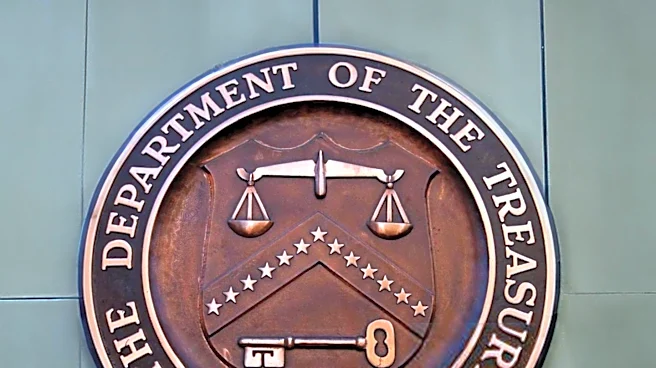
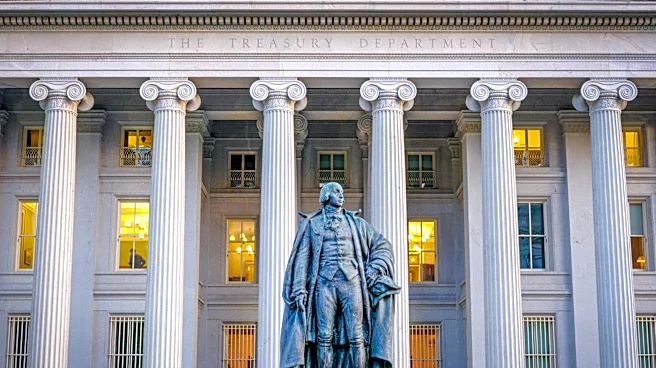
The U.S. Treasury Department has issued an order to sever crypto exchange MEXC Global from the U.S. financial system. The Treasury’s Financial Crimes Enforcement Network (FinCEN) alleges that MEXC Global facilitated at least $16 billion in transactions
linked to sanctions evasion, cybercrime, and other illicit activities. Specifically, FinCEN claims that MEXC handled transactions involving sanctioned entities in Iran, Russia, and North Korea between May 2021 and May 2026, including approximately $1.5 billion related to Russian sanctions evasion. This order will prohibit U.S. financial institutions from processing money transfers involving MEXC and is set to take effect 30 days after its publication in the Federal Register. This action represents a significant escalation in the U.S. government's efforts to regulate crypto-linked financial activities, focusing on the connections between crypto exchanges and the traditional financial system.
Why It's Important?
This action by the Treasury Department underscores the increasing scrutiny on cryptocurrency exchanges regarding compliance with financial regulations and sanctions. The move against MEXC Global highlights how sanctions enforcement can significantly impact crypto market liquidity, exchange risk, and overall compliance standards within the digital-asset sector. For U.S. financial institutions, it mandates a strict avoidance of transactions with MEXC, increasing their compliance burden. For the broader crypto market, it signals that regulators are prepared to restrict market access for entities deemed non-compliant, even without a blanket ban on cryptocurrencies. This could lead to increased spending on blockchain analytics, sanctions screening, and customer due diligence across the industry, potentially favoring larger, more compliant platforms and challenging smaller ones.
What's Next?
The order will become effective 30 days after its publication in the Federal Register, at which point U.S. financial institutions will be legally prohibited from engaging in transactions with MEXC Global. Market participants will closely monitor several indicators, including the official publication date, any subsequent shifts in liquidity on MEXC and competing exchanges, and potential reactions from regulators in other jurisdictions. Traders should observe changes in trading volume, bid-ask spreads, stablecoin flows, and withdrawal activity. The action may prompt other countries to increase scrutiny on exchanges with unclear ownership, limited transparency, or weak sanctions controls. The broader crypto industry is expected to adapt by enhancing compliance measures to mitigate similar risks, potentially leading to consolidation among exchanges.
Beyond the Headlines
This enforcement action by the U.S. Treasury extends beyond immediate financial restrictions, signaling a broader regulatory trend focusing on the integration points between the crypto ecosystem and traditional finance. It emphasizes that maintaining access to U.S. banking and payment networks is contingent upon robust compliance frameworks, particularly concerning anti-money laundering (AML) and counter-terrorist financing (CTF) protocols. The case of MEXC Global illustrates that regulatory bodies can effectively constrain crypto operations by targeting their access to conventional financial infrastructure, rather than outright banning digital assets. This development could foster a more regulated and transparent crypto environment, but it also raises questions about the global reach of U.S. financial regulations and their impact on international crypto exchanges and their users.