






What's Happening?
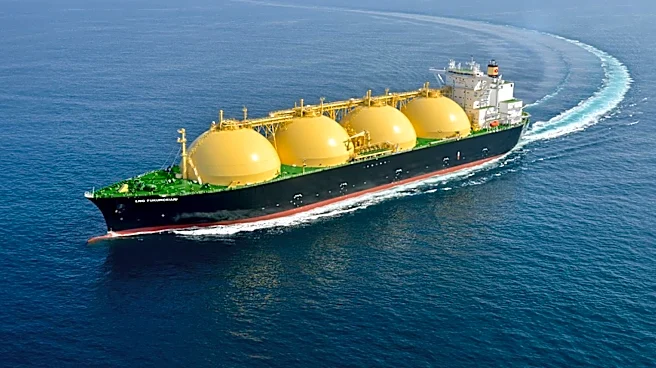
The global natural gas market is experiencing a significant supply crunch, driven by geopolitical conflicts and a surge in demand from the artificial intelligence (AI) sector. LNG spot market prices in Asia have more than tripled since the beginning of
the year, with the Japan-Korea Marker reaching over $31 per million British thermal units. This price surge is largely attributed to the war in the Persian Gulf, which has removed Qatar, one of the top three liquefied gas exporters, from the market. The International Energy Agency (IEA) estimates that this conflict has resulted in a loss of approximately 60 billion cubic meters of LNG supply. Despite increased exports from the U.S. and Africa, a substantial gap remains, leading the IEA to forecast a record 3% decline in global LNG production this year. Concurrently, the booming AI industry is driving unprecedented demand for power, with data centers increasingly relying on natural gas as a reliable energy source.
Why It's Important?
This global gas supply crunch has significant implications for the U.S. and its allies. While the U.S. is exporting record volumes of LNG, the tight global market means higher prices and increased competition for available supplies. This can impact domestic energy costs, potentially leading to higher utility bills for consumers and increased operational expenses for industries. The reliance of the burgeoning AI sector on natural gas for power generation creates a new layer of demand pressure, further tightening the market. This situation could accelerate the global energy transition debate, highlighting the need for diversified energy portfolios and resilient supply chains. For the U.S., maintaining its position as a key LNG exporter while ensuring domestic energy security will be a critical balancing act.
What's Next?
The global gas supply crunch is expected to persist well into 2027, according to the IEA. This forecast suggests continued price volatility and heightened competition for LNG cargoes. The U.S. will likely continue to play a crucial role in supplying global markets, but domestic policy will need to navigate the balance between export opportunities and ensuring affordable energy for its own citizens and industries. The ongoing geopolitical tensions and the rapid expansion of AI infrastructure will keep natural gas at the forefront of energy discussions. Companies in the energy sector may accelerate investments in new production and infrastructure to meet demand, while governments may explore strategic reserves and international energy agreements to stabilize supplies.
Beyond the Headlines
The confluence of geopolitical instability and technological advancement, specifically the AI boom, reveals a complex and evolving energy landscape. The war in the Persian Gulf not only disrupts immediate supply but also exposes the fragility of global energy interdependence. Simultaneously, the energy demands of AI, often overlooked in broader climate discussions, present a new challenge to achieving sustainability goals. The reliance on natural gas for data centers, while providing reliability, also raises questions about the long-term environmental impact and the potential for increased carbon emissions. This situation highlights the need for innovative solutions that integrate energy security, economic stability, and environmental responsibility, pushing beyond traditional energy models to address the multifaceted challenges of the 21st century.