






What's Happening?
Mortgage rates have eased slightly but remain high, with the 30-year fixed-rate mortgage averaging 7.35% this week, a minor decrease from 7.38% a week prior. This sustained high-rate environment is making home affordability challenging for many prospective
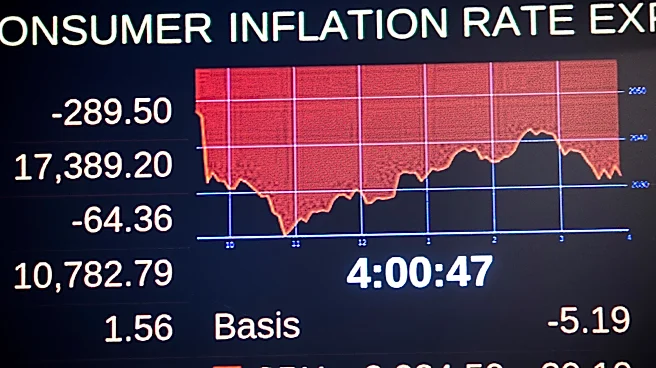
buyers. In response, loan officers are increasingly relying on seller concessions and adjustable-rate mortgages (ARMs) to facilitate deals. For instance, 30-year jumbo loans saw a 6-basis-point decline to 7.56%, while 30-year Federal Housing Administration (FHA) loans increased by 6 basis points to 7.22%. The Consumer Price Index's 0.4% monthly rise in October, exceeding expectations, suggests that inflation remains a significant hurdle, potentially influencing the Federal Reserve's decision on interest rates in December. This economic uncertainty is making buyers highly sensitive to payment amounts, leading to a shift in market dynamics where buyers are gaining more leverage.
Why It's Important?
The persistence of high mortgage rates has a substantial impact on the U.S. housing market and its stakeholders. Buyers are facing increased financial pressure, leading to a greater demand for creative financing solutions like temporary and permanent rate buydowns, and ARMs. This trend indicates a shift from the competitive, seller-dominated market seen during the COVID-19 pandemic, where buyers often paid above asking price. Now, inventory is building in some regions, giving buyers more negotiation power and prompting sellers and builders to offer larger concessions. This benefits buyers by potentially reducing their initial costs and monthly payments, but it puts pressure on sellers and builders to adjust their pricing strategies and profit margins. The reliance on ARMs also introduces future interest rate risk for homeowners, as their payments could increase when the fixed-rate period ends. The broader economic implication is that sustained high rates could cool the housing market further, impacting construction, real estate services, and related industries.
What's Next?
Economists anticipate that hotter inflation data could delay any significant relief in mortgage rates, suggesting that rates will likely remain elevated for the foreseeable future. This environment will continue to push buyers towards needs-based moves rather than discretionary purchases, as many will wait for more favorable conditions. The increased use of seller concessions and ARMs is expected to continue as a primary strategy for closing deals. Lenders will need to adapt by offering a wider range of products and payment structures to meet diverse borrower needs. The Federal Reserve's upcoming December meeting will be closely watched, as any decision to raise interest rates could further impact mortgage rates and housing affordability. The market may see a continued shift towards a buyer's market in certain areas, with more opportunities for negotiation and concessions.
Beyond the Headlines
The current mortgage rate environment highlights a deeper shift in consumer behavior and market dynamics. The willingness of buyers to accept ARMs, despite their inherent risks, underscores the urgency of homeownership for some, even if it means taking on future uncertainty. This also reflects a generational shift, as younger buyers, particularly Millennials and Gen Z, face unprecedented challenges in entering the housing market. The increased reliance on seller concessions could become a more entrenched feature of the market, potentially altering traditional real estate transaction structures. Furthermore, the situation raises questions about long-term housing affordability and wealth accumulation, especially for first-time homebuyers who are already struggling with rising rents and stagnant incomes. The market's adaptation to these high rates could lead to innovative financial products and a re-evaluation of what constitutes an 'affordable' home purchase in the U.S.