





What's Happening?
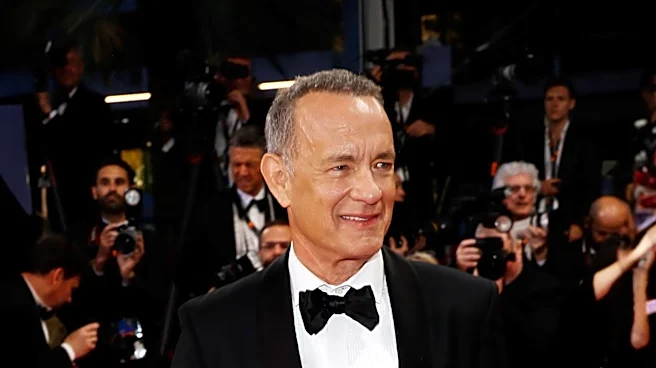
Tom Hanks, a celebrated Hollywood actor, personally financed a pivotal running scene in the film 'Forrest Gump' after the production studio declined to cover the costs. This decision, made in collaboration with director Robert Zemeckis, involved Hanks reducing
his salary and also paying for insurance for another scene that the studio was unwilling to fund. In exchange for these personal investments, Hanks and Zemeckis negotiated a share of the film's profits. This strategic move proved highly lucrative for Hanks, as the film's success ultimately earned him an estimated $60 million. The film, released 30 years ago, is widely recognized for Hanks's central role and his significant contributions both on and off-screen.
Why It's Important?
This event highlights a unique aspect of film financing and the potential for actors to leverage their belief in a project for substantial financial gain. Hanks's willingness to invest his own money demonstrates a deep commitment to the artistic vision of 'Forrest Gump,' which ultimately paid off handsomely. It also underscores the financial risks and rewards involved in the entertainment industry, where a successful film can generate immense profits for those with a stake in its success. This case serves as an example of how creative professionals can sometimes bypass traditional studio funding limitations by taking on personal financial responsibility, potentially leading to greater creative control and a larger share of the revenue.
What's Next?
While this specific event occurred in the past, its implications continue to resonate within the film industry. The success of 'Forrest Gump' and Hanks's financial acumen could serve as a model or inspiration for other actors and directors seeking to gain more control over their projects and potentially increase their earnings. Future negotiations between talent and studios might reference such precedents, influencing how profit-sharing and production costs are structured. The ongoing legacy of 'Forrest Gump' as a critically and commercially successful film also ensures continued discussion of the unique circumstances surrounding its production, including Hanks's personal financial contributions.
Beyond the Headlines
The story of Tom Hanks funding a scene in 'Forrest Gump' delves into the complex relationship between artistic integrity and commercial viability in Hollywood. It raises questions about the extent to which creative talent should bear financial risk for projects they believe in, especially when studios are hesitant. This situation also subtly critiques the traditional studio system, where financial constraints can sometimes impede artistic vision. Hanks's gamble, which paid off spectacularly, underscores the value of conviction and foresight in a highly competitive industry. It also highlights how individual contributions, beyond acting, can profoundly shape a film's outcome and its financial success, influencing the broader economic landscape of filmmaking.