







What's Happening?
GlobalFoundries (GFS US) reported stronger-than-expected third-quarter 2026 results, with revenue reaching $1.90 billion, a 13% year-over-year increase, slightly above market expectations. Adjusted earnings per share (EPS) stood at $0.53, surpassing the
forecast of $0.50, marking a 29% year-over-year increase. The adjusted gross margin improved significantly to 31.4% from 26.0% a year prior, exceeding the anticipated 30.5%. This robust performance was primarily fueled by an 81% year-over-year surge in revenue from the Communications Infrastructure & Data Center segment, which now accounts for 17% of total revenue. This growth is attributed to strong demand for Silicon Photonics and Silicon Germanium (SiGe) technologies essential for high-speed communication systems in AI data centers. Conversely, the Smart Mobile Devices segment experienced a 19% decline in revenue, reaching $611 million, due to a slowdown in device demand and inventory adjustments, making it the lowest proportion of revenue in the company's history at 32%.
Why It's Important?
The exceptional growth in GlobalFoundries' AI Data Center business highlights a significant shift in the semiconductor market, where demand for specialized chips supporting artificial intelligence and high-performance computing is rapidly accelerating. This trend is crucial for the U.S. economy, as it signifies a growing domestic capability in advanced technology sectors, reducing reliance on foreign manufacturing for critical components. The company's focus on high-value products like Silicon Photonics and advanced packaging positions it favorably in a competitive landscape, potentially leading to higher profit margins and sustained growth. The decline in the Smart Mobile Devices segment, however, indicates a broader market challenge for consumer electronics, suggesting a reallocation of resources and strategic focus within the semiconductor industry towards more lucrative and high-growth areas. This strategic pivot is vital for GlobalFoundries to maintain its market leadership and contribute to the U.S.'s technological independence and economic resilience.
What's Next?
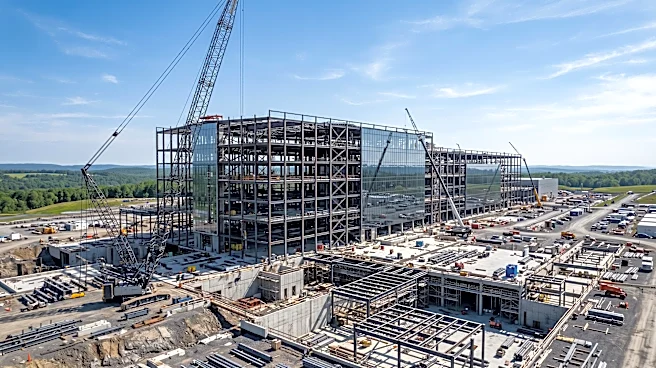
For the fourth quarter of 2026, GlobalFoundries projects revenue between $1.975 billion and $2.025 billion, with an adjusted EPS forecast of $0.54 to $0.64. The company plans a net capital expenditure of approximately $4 billion in 2027 to expand its manufacturing capacity for Silicon Photonics, SiGe, and advanced chip packaging technologies. A significant portion of this investment is expected to be supported by customer prepayments and incentives from the U.S. government under the CHIPS Act. GlobalFoundries has also secured a $2 billion, five-year manufacturing agreement with TSMC for silicon interposers, with commercial production expected to commence in the first half of 2028. Additionally, collaborations with Marvell for SiGe expansion and Monolithic Power Systems for AI power management chips are set to begin commercial production in 2027. These initiatives are aimed at meeting the escalating demand for AI-related semiconductors and strengthening the company's long-term growth prospects.
Beyond the Headlines
GlobalFoundries' strategic investments and partnerships, particularly in Silicon Photonics and advanced packaging, are indicative of a broader industry trend towards highly integrated and specialized semiconductor solutions. This move is not just about increasing production capacity but also about enhancing the performance and efficiency of chips crucial for next-generation AI and data center applications. The substantial capital expenditure, partly offset by government incentives, reflects a concerted effort to build a resilient domestic semiconductor supply chain, a key objective of the U.S. CHIPS Act. This could lead to a more robust and secure technological infrastructure for the nation. However, the increased capital outlay also presents short-term cash flow pressures, which the company aims to mitigate through customer prepayments and government support. The shift away from lower-margin mobile device chips towards higher-value AI and data center components suggests a strategic realignment that could redefine the company's market position and profitability in the coming years.