








What's Happening?
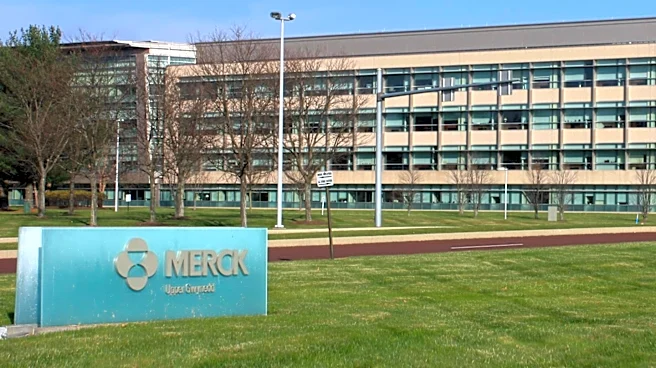
Merck announced plans to raise its revenue forecast for the next decade, driven by optimism surrounding new drugs, including an experimental personalized mRNA cancer vaccine developed with Moderna. CEO Robert Davis indicated that the company's previous
forecast of $70 billion by the mid-2030s did not fully account for recent positive clinical trial readouts and new assets. Specifically, the personalized mRNA cancer vaccine, intismeran, showed promising late-stage data, cutting the risk of melanoma death or recurrence by 42% when combined with Keytruda. This success, along with the potential for wide use of experimental cancer treatment sacituzumab tirumotecan (sac-TMT), is fueling Merck's confidence. The company also reported strong third-quarter results, exceeding Wall Street estimates due to robust demand for Keytruda, Winrevair, and Gardasil.
Why It's Important?
Merck's increased revenue forecast and focus on new drug development, particularly in the mRNA cancer vaccine space, signal a significant shift in the pharmaceutical landscape. As Keytruda, Merck's blockbuster cancer drug, approaches patent expiration in 2028, the company is strategically investing in a diversified pipeline to maintain its market leadership. The success of the personalized mRNA cancer vaccine could revolutionize cancer treatment by offering highly targeted therapies, potentially leading to better patient outcomes and opening up new revenue streams for Merck. This development also underscores the growing importance of mRNA technology beyond infectious diseases, demonstrating its potential in oncology. For the U.S. healthcare system, these advancements could mean access to cutting-edge cancer treatments, though questions about affordability and access will likely arise.
What's Next?
Merck plans to provide more detailed updates on its pipeline, including trial timelines for sac-TMT and further data for the mRNA cancer vaccine. Investors and analysts will be closely monitoring these developments, as they are crucial for Merck's long-term growth strategy. The company expects moderate top-line growth in 2027, with gains from newer drugs and animal health partially offset by generic competition and patent expirations. Merck's continued investment in acquisitions and research and development aims to reduce its dependence on Keytruda and secure its position as a leader in innovative therapies. The ongoing collaboration with Moderna on the mRNA cancer vaccine will also be a key area to watch for future progress and potential market entry.
Beyond the Headlines
The success of personalized mRNA cancer vaccines, as highlighted by Merck's optimism, represents a profound shift towards precision medicine. This approach moves beyond one-size-fits-all treatments, offering therapies tailored to an individual's genetic makeup and tumor characteristics. This raises broader questions about the infrastructure required to support such personalized treatments, including advanced diagnostic capabilities and specialized manufacturing processes. Furthermore, the ethical implications of highly individualized therapies, such as equitable access and potential cost disparities, will become increasingly relevant. Merck's strategic pivot also reflects a larger trend in the pharmaceutical industry, where companies are increasingly investing in high-risk, high-reward innovative technologies to secure future growth in a competitive and rapidly evolving market.