






What's Happening?
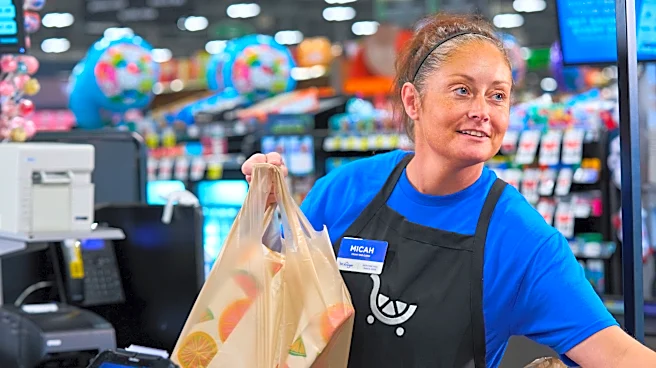
Kroger, a major grocery retailer, has introduced a new mandatory uniform policy for its approximately 400,000 employees, marking the first such change in a decade. The new dress code requires employees to wear company-issued T-shirts or polos, while managers
will wear button-down shirts or quarter-zip jackets. These uniforms are available in blue, red, or black, with the specific color depending on the store division. This initiative aims to enhance employee recognizability for shoppers and establish a consistent appearance across all Kroger stores. Previously, employees wore their own clothing underneath a company-provided apron. The update was reportedly influenced by feedback from both customers and employees, who indicated that the new look makes staff easier to locate within stores. Kroger has completed the rollout of these new uniforms and has reported positive initial feedback from both associates and customers.
Why It's Important?
This uniform policy change is significant for Kroger as it seeks to improve customer experience and operational efficiency. By making employees more visible and identifiable, Kroger aims to streamline customer interactions and potentially enhance service quality. A consistent appearance across its nearly 400,000-strong workforce can also reinforce brand identity and professionalism. This move comes at a time when Kroger is facing various operational challenges, including scrutiny over overcharging incidents in Ohio and the ongoing closure of over 60 underperforming stores. Despite these issues, Kroger was recently recognized for offering the cheapest store-brand grocery basket compared to other major U.S. grocery chains. The uniform update, therefore, represents an effort to project a unified and customer-focused image amidst broader business adjustments and competitive pressures in the retail sector.
What's Next?
Kroger will likely continue to monitor the impact of its new uniform policy on both employee morale and customer satisfaction. The company has already reported positive initial feedback, suggesting that the change is being well-received. Future assessments may involve further surveys or feedback mechanisms to gauge long-term effectiveness. The success of this uniform initiative could influence similar branding or operational adjustments in other large retail chains. Additionally, as Kroger continues to navigate challenges such as store closures and pricing scrutiny, the uniform policy is one component of a broader strategy to maintain its market position and improve its public image. The company's focus on consistency and customer recognition through this policy may also be integrated into future employee training and customer service standards.
Beyond the Headlines
The implementation of a new uniform policy by a large employer like Kroger touches upon deeper aspects of corporate culture, employee identity, and consumer perception. While seemingly a minor operational change, a mandatory uniform can influence how employees perceive their role and connection to the company, fostering a sense of team unity or, conversely, a feeling of reduced individuality. For customers, the increased recognizability of staff can enhance the shopping experience by making assistance more accessible, potentially leading to greater satisfaction and loyalty. This move also highlights the ongoing efforts of traditional retailers to adapt and compete in a dynamic market, where customer experience and brand consistency are increasingly crucial. The balance between corporate control over employee appearance and fostering a positive work environment is a continuous challenge for large organizations, and Kroger's approach offers a case study in managing these dynamics.