
What's Happening?
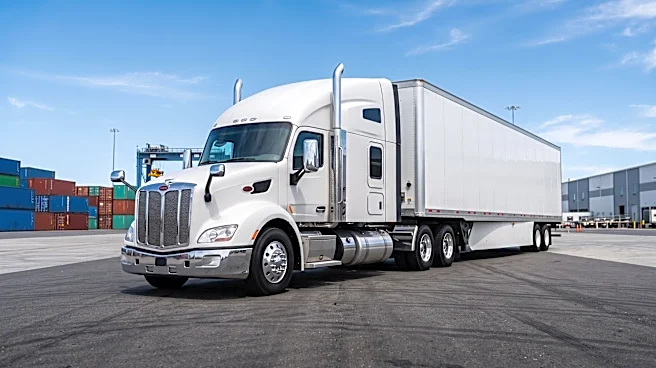
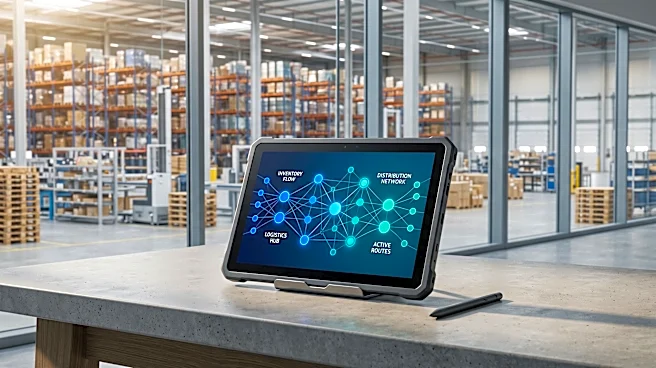
Penske Logistics has implemented new technology at its Shippensburg, Pennsylvania, facility to automate the identification and timestamping of arriving and departing trailers. This initiative, utilizing
Blue Yonder and Panasonic Edge solutions, aims to improve gate throughput and minimize manual errors in logistics operations. While Penske Logistics reported these operational gains, the company has not yet quantified a reduction in detention times. This development highlights a broader industry focus on optimizing the handoff between truck arrivals and departures, a process that often leads to significant costs beyond just detention fees. The logistics sector is increasingly recognizing that inefficiencies in yard management can lead to substantial losses in the productive capacity of drivers, trailers, docks, labor, and yard equipment.
Why It's Important?
The improvements at Penske Logistics' Shippensburg site are important because they address a critical, yet often overlooked, area of logistics inefficiency: yard management. The American Transportation Research Institute's 2024 study, using 2023 data, estimated that detention costs the industry $3.6 billion in direct expenses and $11.5 billion in lost productivity, totaling over 135 million hours of detention. By automating gate processes, Penske Logistics is tackling a source of these hidden costs, which can impact the entire supply chain. While a specific detention reduction has not been quantified, enhanced gate throughput and fewer manual errors can lead to more efficient use of resources, potentially reducing idle time for drivers and equipment. This can translate into significant savings for logistics providers and shippers, ultimately benefiting consumers through more streamlined and cost-effective delivery of goods. The move also underscores a growing trend towards leveraging technology to gain operational efficiencies in the complex logistics landscape.
What's Next?
The next steps for Penske Logistics will likely involve further analysis to quantify the impact of these technological implementations, particularly regarding detention reduction. The company's experience at Shippensburg could serve as a model for deployment at other facilities, potentially leading to broader adoption of similar automation solutions across its network. The logistics industry as a whole is expected to continue investing in yard management systems and automation to address the persistent issue of idle trailers and associated costs. As seen with other companies like Kimberly-Clark and Volvo Group, early warnings and real-time visibility into yard operations can lead to substantial reductions in detention fees and improved productivity. Future developments may include more sophisticated integration of these systems with transportation and warehouse management systems to create a more holistic and responsive logistics ecosystem.
Beyond the Headlines
The efforts by Penske Logistics to optimize its yard operations point to a deeper shift in how the logistics industry views and manages its physical spaces. Historically, the yard has been treated as an interstitial space between transportation and warehousing, often overlooked in optimization efforts. However, the financial implications of an inefficient yard are substantial, extending beyond simple detention fees to encompass lost productivity across various assets. This focus on yard efficiency highlights a growing recognition that every component of the supply chain, no matter how seemingly minor, contributes to overall cost and performance. The ethical implication lies in the potential for improved driver working conditions, as reduced idle times can alleviate stress and improve quality of life for truck drivers. Culturally, it signifies a move towards data-driven decision-making and automation in traditionally manual processes, transforming the skill sets required within the logistics workforce.