


What's Happening?
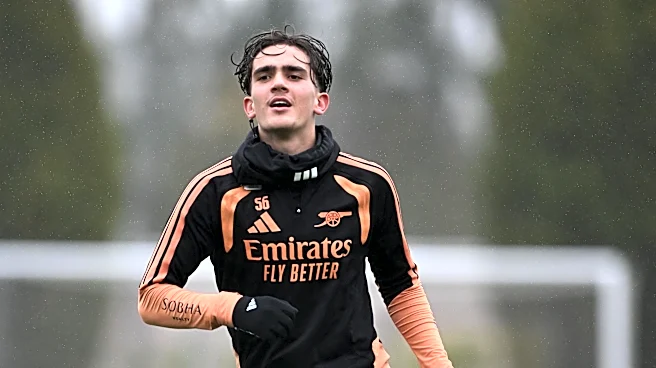
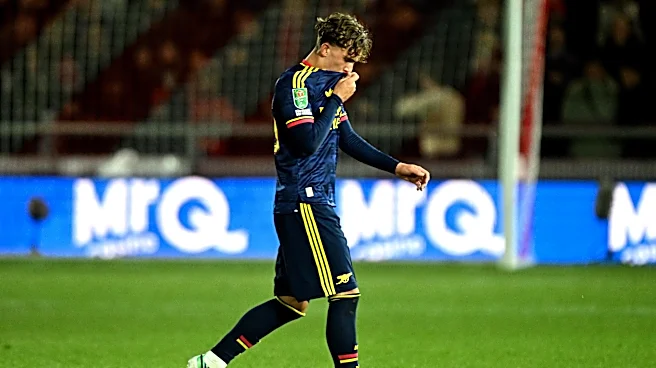
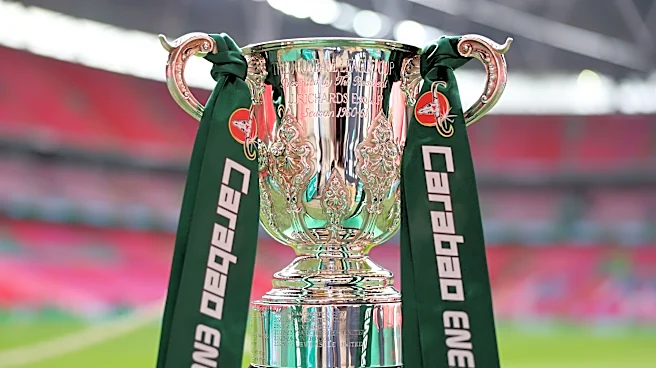
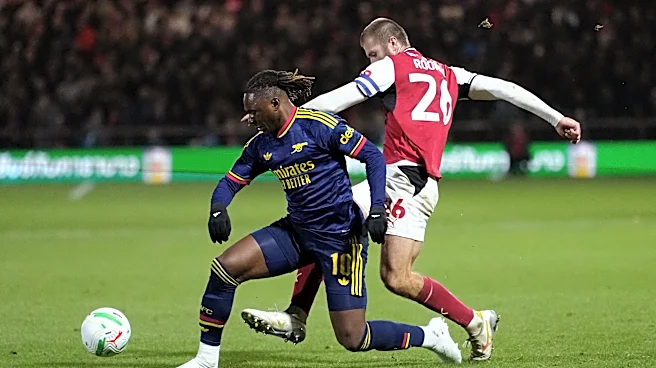
During Arsenal's Carabao Cup match against Fleetwood Town, teenage player Max Dowman received a red card with just four minutes remaining in the game. The incident occurred when Dowman, after having his leg trapped by Fleetwood defender Harrison Neal,
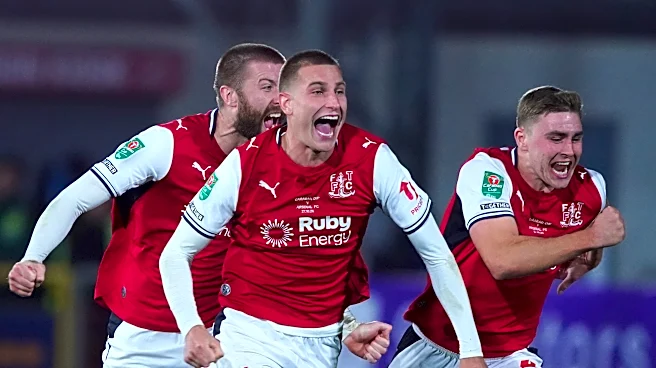
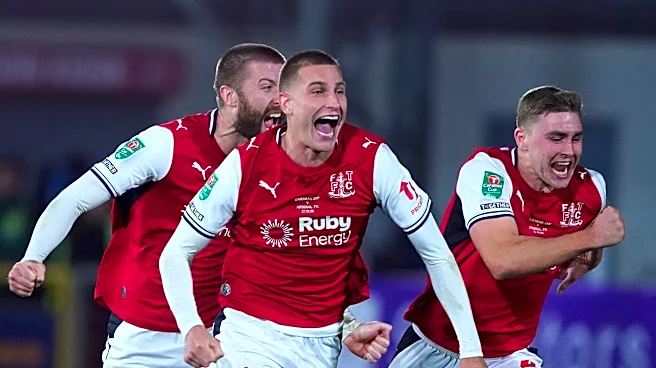
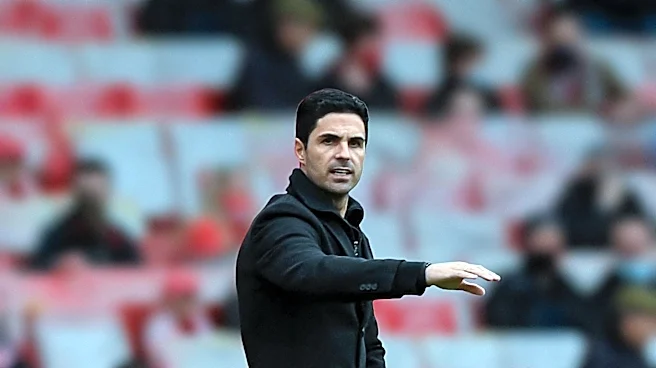
nudged Neal with his leg, leading to a skirmish between players. Referee Michael Salisbury promptly issued a red card, reducing Arsenal to 10 men. As Dowman exited the pitch, Arsenal head coach Mikel Arteta was observed speaking to him. A lip-reading expert, Nicola Hickling, in partnership with Covers.com, interpreted Arteta's words to Dowman as, "Get in the changing room, Max." This interaction took place as Arsenal was ultimately eliminated from the Carabao Cup, losing on penalties after the game ended in a 1-1 draw. The match saw Aaron Loupalo-Bi open the scoring for Fleetwood, with Viktor Gyokeres equalizing for Arsenal in the second half.
Why It's Important?
This incident highlights the intense pressure and emotional stakes involved in professional football, even in cup competitions. For young players like Max Dowman, a red card can be a significant learning experience, underscoring the importance of maintaining composure under provocation. Arteta's direct instruction to Dowman, as interpreted by the lip-reading expert, suggests a blend of frustration with the player's actions and a desire to manage the situation swiftly. Such moments can impact a player's development and their standing within the team. For Arsenal, the red card contributed to their disadvantage in the closing minutes of a crucial match, ultimately leading to their elimination from the Carabao Cup. This early exit from a competition can affect team morale, financial incentives, and the overall perception of the club's performance for the season.
What's Next?
Following his red card, Max Dowman will likely face a suspension from future matches, the length of which will depend on the Football Association's disciplinary review. This suspension could impact his opportunities for first-team play or further development within Arsenal's squad. Mikel Arteta and the Arsenal coaching staff will likely address the incident internally with Dowman, focusing on discipline and emotional control during high-pressure situations. The team will also need to regroup after their Carabao Cup exit, shifting their focus to upcoming league and other cup fixtures. The incident may also spark discussions among sports commentators and fans regarding the temperament of young players and the role of coaching in managing such situations. Arsenal's performance in subsequent matches will be scrutinized as they aim to recover from this setback.
Beyond the Headlines
The incident involving Max Dowman and Mikel Arteta touches upon broader themes within professional sports, particularly the psychological demands placed on young athletes. The immediate emotional reaction leading to a red card, as seen with Dowman, underscores the fine line between competitive spirit and disciplinary breaches. This event can serve as a case study for sports psychology, examining how athletes, especially those early in their careers, manage frustration and aggression. Furthermore, the public interpretation of Arteta's words through lip-reading highlights the constant scrutiny faced by public figures in sports, where every action and utterance can be analyzed and debated. It also brings to light the ethical considerations of such interpretations and their potential impact on individuals' reputations. The incident also reflects on the culture of youth development in elite football, where talent must be coupled with mental resilience and discipline.