





What's Happening?
Nathan Fielder and Lance Oppenheim's documentary about Elizabeth Holmes, titled 'You Can See Everything,' had its world premiere as a surprise secret screening at the Telluride Film Festival. The event drew significant crowds, with attendees required
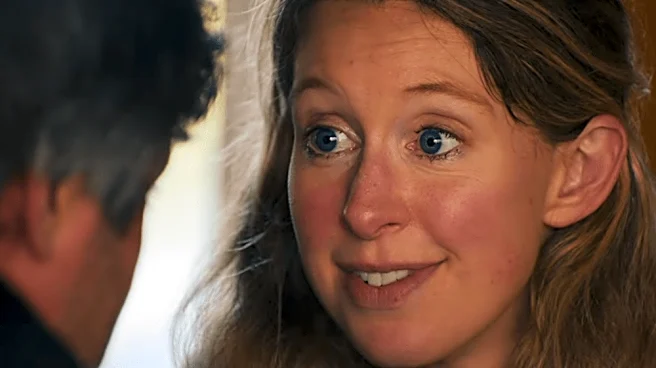
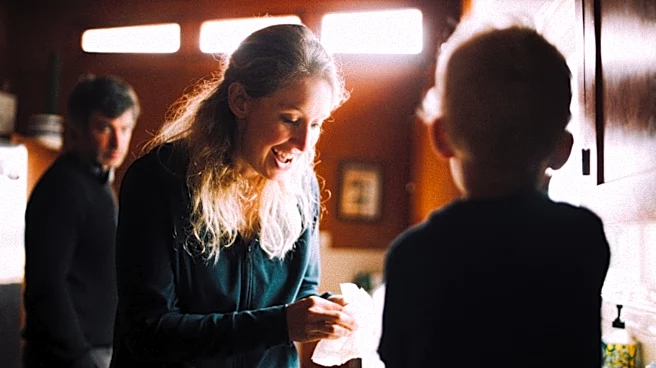
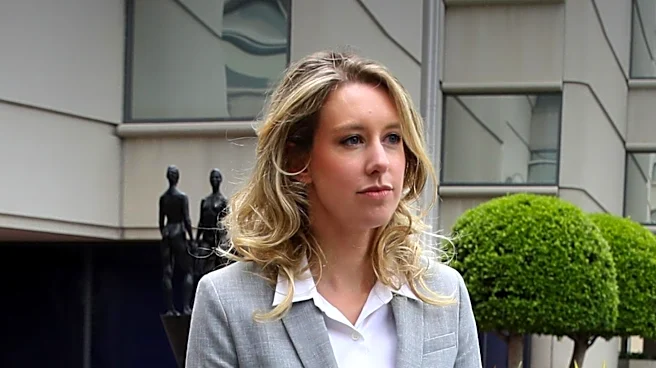
to check in their phones. The film, produced by A24, focuses on Holmes's life in the 34 days leading up to her imprisonment. The official logline describes it as an intimate portrait that evolves into a three-year journey into the abyss. A teaser released on Sunday night features Holmes asserting her authenticity, stating, "I'm not that person. I can promise you that. I don't have anything to deceive you on; of course, I'm not deceiving you. I'm engaging with you as a human being, hm. Why would I deceive you? There's no reason for me to do that. … I'm always being real." The documentary is scheduled for a public release in October. Holmes was convicted of fraud in 2018 for her role in Theranos, a company that falsely claimed to perform various disease tests with minimal blood samples. She was once recognized as the youngest and wealthiest self-made female billionaire in the U.S. in 2015 but was later found guilty of defrauding investors and is currently serving an 11-year prison sentence.
Why It's Important?
The premiere of 'You Can See Everything' is significant for several reasons. Firstly, it marks a high-profile return to the public eye for Elizabeth Holmes, albeit through a documentary lens, reigniting discussions about corporate fraud, Silicon Valley's culture, and the ethics of ambition. For the U.S. film industry, the involvement of acclaimed directors Nathan Fielder and Lance Oppenheim, coupled with A24's backing, signals a major cinematic event that could attract substantial viewership and critical attention. The film's focus on Holmes's pre-imprisonment period offers a unique perspective on a figure who became a symbol of deceptive innovation, potentially influencing public perception and understanding of her story. Furthermore, the documentary's release could prompt renewed scrutiny of the venture capital ecosystem and the pressures that can lead to fraudulent practices in the tech sector, impacting investor confidence and regulatory discussions. The requirement for attendees to check their phones at the premiere also highlights the film's sensitive nature and the desire to control its initial reception.
What's Next?
With its world premiere at Telluride, 'You Can See Everything' is now poised for its broader release in October. This will likely be accompanied by a significant marketing campaign from A24, leveraging the notoriety of Elizabeth Holmes and the reputations of its directors. The film's release will undoubtedly generate extensive media coverage, reviews, and public discussion, potentially influencing how the Theranos scandal is remembered and understood. Depending on its reception, the documentary could become a key piece in the ongoing narrative surrounding corporate ethics and the tech industry. It may also spark further interest in the legal and personal aspects of Holmes's story, potentially leading to more analyses, podcasts, or even fictional adaptations. The film's impact on public opinion could also indirectly affect the perception of other high-profile figures involved in similar controversies.
Beyond the Headlines
The documentary 'You Can See Everything' delves into deeper implications beyond the immediate facts of Elizabeth Holmes's fraud. It explores the psychological dimensions of deception and self-perception, as evidenced by Holmes's insistence on her authenticity in the teaser. This raises questions about the nature of truth, self-delusion, and the performative aspects of leadership, particularly in high-stakes environments like Silicon Valley. The film could also serve as a cultural artifact reflecting society's fascination with fallen icons and the narratives we construct around ambition, failure, and redemption. Ethically, it prompts viewers to consider the responsibility of innovators and the fine line between visionary thinking and outright fraud. The documentary's timing, years after Holmes's conviction, allows for a more reflective examination of the systemic issues that enabled Theranos's rise and fall, offering insights into the pressures and vulnerabilities within the U.S. entrepreneurial landscape and the broader societal implications of unchecked technological hype.