






What's Happening?
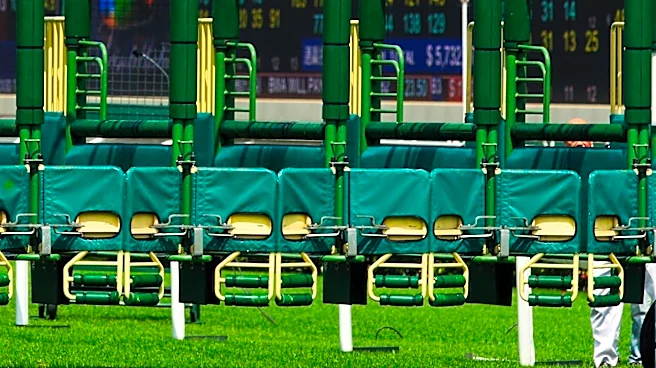
The Illinois Racing Board has denied the applications from Hawthorne Race Course and Suburban Downs, both under the same ownership, to conduct horse races in 2027. The denial comes after Hawthorne Race Course declared bankruptcy in February and its Stickney
property was sold for $90 million to data center developer Digital Realty. The board deemed the applications deficient and non-compliant with state regulations. This decision leaves the future of horse racing at the former Hawthorne site uncertain, especially as local officials in Stickney and Cicero have expressed strong opposition to the construction of a data center there. Stickney village officials have even imposed a six-month moratorium on data centers, and Cicero passed a resolution against the development, citing concerns about electricity, noise, lights, and water usage impacting residents.
Why It's Important?
This decision significantly impacts the Illinois horse racing industry, as Hawthorne and Suburban Downs previously accounted for approximately 61% of all racing days in the state during the 2025 fiscal year. The denial leaves Fairmount Park in Collinsville as Illinois' last remaining Thoroughbred racetrack, which has now been approved for an expanded schedule of 73 race days in 2027, up from 57. The controversy surrounding the former racetrack's sale to a data center developer highlights a growing tension between traditional land use, such as sports and entertainment venues, and the increasing demand for technological infrastructure. Local communities are actively pushing back against data center developments due to potential environmental and quality-of-life impacts, setting a precedent for future land use debates in the state.
What's Next?
With Hawthorne Race Course's application denied and its property sold, the immediate future of horse racing at that specific site is effectively over. The focus will now shift to Fairmount Park, which will carry a significantly larger portion of the state's horse racing calendar. The fate of the former Hawthorne property remains contentious, as Digital Realty's plans for a data center face strong local opposition and a moratorium from Stickney village officials. Further legal and political battles are likely as the developer navigates community resistance and regulatory hurdles. The Illinois Racing Board's decision also signals a potential consolidation within the state's horse racing industry, with fewer venues hosting events.
Beyond the Headlines
The situation at Hawthorne Race Course reflects broader economic and societal shifts. The decline of traditional industries like horse racing, coupled with the rise of the digital economy and its infrastructure demands, creates complex land use challenges. The community's resistance to the data center highlights increasing public awareness and concern over the environmental footprint of technology, including energy consumption, noise pollution, and water usage. This case could serve as a model for how communities nationwide respond to the expansion of data centers and other large-scale industrial developments, potentially influencing zoning laws and environmental regulations. It also underscores the economic vulnerability of legacy sports venues when faced with more lucrative development opportunities.