




What's Happening?
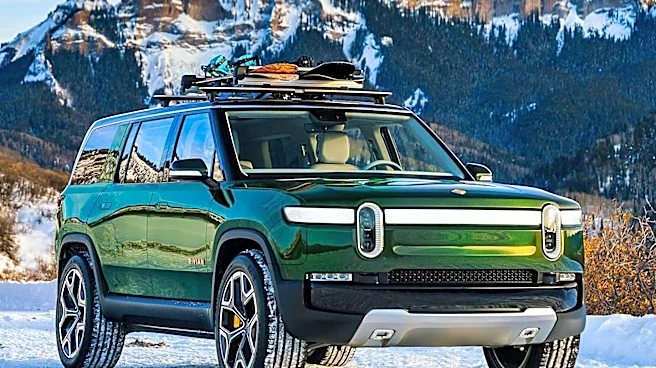
RJ Scaringe, CEO of Rivian, believes that Chinese automakers will eventually sell electric vehicles (EVs) in the U.S. market. He stated that current tariffs are the primary factor maintaining a level playing field, but expects Chinese EVs to enter the U.S. "in
the fullness of time." Scaringe attributes China's cost advantage to cheaper labor, government-backed capital, and lower electricity and utility costs. He views tariffs as a mechanism for a country to decide whether to retain an industry. To address the labor cost gap that tariffs currently cover, Scaringe has raised over a billion dollars for Mind Robotics, a separate company focused on developing "humanoid-ish" machines for assembly lines. This initiative aims to shrink the cost disparity, making U.S. manufacturing more competitive when Chinese EVs eventually enter the market.
Why It's Important?
This perspective from a prominent U.S. EV manufacturer CEO is significant for the American automotive industry and consumers. It suggests that the current protectionist measures against Chinese EVs are seen as temporary, implying that U.S. companies must innovate and become more cost-efficient to compete in the long run. The potential entry of Chinese EVs, known for their competitive pricing and rapid technological advancements, could introduce significant competition, forcing American EV makers and legacy original equipment manufacturers (OEMs) to accelerate their development of more affordable and advanced vehicles. While this could benefit consumers through lower prices and more options, it also poses a challenge to the profitability and market share of existing U.S. players. Scaringe's investment in robotics highlights a strategic response to this anticipated competition, focusing on automation to reduce manufacturing costs and maintain competitiveness.
What's Next?
The U.S. automotive industry is likely to continue its efforts to innovate and reduce production costs, particularly through advancements in automation and robotics, as exemplified by Rivian's Mind Robotics initiative. Policymakers may face ongoing pressure to balance protectionist measures with the benefits of market competition. The eventual entry of Chinese EVs could lead to a more dynamic and competitive U.S. EV market, potentially driving down prices and accelerating EV adoption. However, it could also intensify debates about fair trade practices, intellectual property, and national security concerns related to foreign-made automotive technology. U.S. consumers can anticipate a wider range of EV options and potentially more aggressive pricing strategies from both domestic and international manufacturers in the coming years.
Beyond the Headlines
Scaringe's comments delve into the deeper economic and technological shifts occurring in the global automotive industry. The reliance on tariffs as a temporary shield underscores a fundamental challenge for developed economies: how to compete with countries that have significant cost advantages. The investment in advanced robotics, such as "humanoid-ish" machines, represents a long-term strategy to bridge this gap, signaling a future where automation plays an even more critical role in manufacturing. This shift could have profound implications for labor markets, requiring new skills and potentially altering the nature of factory work. Furthermore, the anticipated competition from Chinese EVs highlights the rapid pace of innovation in China and the need for U.S. companies to not only match but exceed these advancements to maintain global leadership in the electric vehicle sector.