







What's Happening?
Atlantic Fish, based in Hampstead, North Carolina, and Vienna, Austria-based food tech startup Revo Foods have announced a partnership to create cell-cultured seafood, specifically whitefish alternative products. This collaboration will utilize mycoprotein,
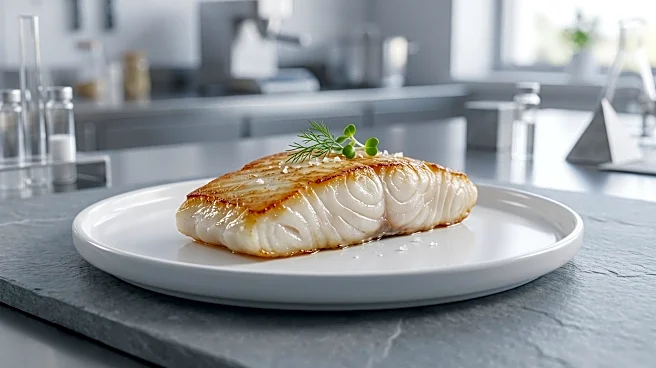
a fermented fungi-based protein, as the primary ingredient, combined with Atlantic Fish's cultivated whitefish cells. The companies aim to leverage Revo Foods' 3D extrusion technology to replicate the texture and flavor profile of whole-cut fish. This hybrid approach seeks to address the economic viability and scalability challenges of producing whole-cut cultivated seafood, as over 80% of whitefish products are consumed in this format. Revo Foods has previously succeeded in replicating whole-cut fish texture with its 'EL BLANCO – Inspired by Black Cod' product using layered protein structures. The partnership will test the economical, technical, and sensory applicability of combining cell-based materials with 3D-structuring systems.
Why It's Important?
This partnership is significant for the U.S. food industry as it represents an innovative approach to bringing cell-cultured seafood to market. By using mycoprotein as a primary carrier, the companies aim to reduce the cost of cell-based meat, making it more accessible and competitive with traditional seafood. The focus on whole-cut products is crucial for consumer acceptance, as this format dominates the whitefish market. If successful, this hybrid technology could accelerate the commercialization of cultivated seafood, offering a sustainable alternative to conventional fishing practices which face environmental pressures. This development could also influence U.S. food policy and regulatory frameworks as new hybrid food products emerge, potentially leading to new labeling standards and safety assessments. The collaboration highlights a growing trend in the alternative protein sector to combine different technologies to overcome existing hurdles in taste, texture, and cost.
What's Next?
The immediate next steps for Atlantic Fish and Revo Foods involve testing the combined cell-based materials and 3D-structuring systems to assess their economical, technical, and sensory applicability. The companies will focus on ensuring that the hybrid products meet consumer standards for taste and texture, similar to plant-based alternatives. This initiative is not intended to replace plant-based products entirely but to offer an additional practical and sustainable option for consumers. Success in this testing phase could lead to further investment and scaling of production, potentially bringing these hybrid whitefish products to U.S. markets. The development could also spur other companies in the alternative protein sector to explore similar hybrid models, fostering further innovation in sustainable food production. Regulatory bodies in the U.S. will likely monitor the progress of such hybrid products to establish appropriate guidelines for their production and sale.
Beyond the Headlines
This collaboration delves into the deeper implications of food technology, particularly the ethical and environmental dimensions of meat production. The use of mycoprotein, a fermented fungi-based protein, alongside cultivated cells, signifies a shift towards more complex and integrated approaches in alternative protein development. This move could mitigate some of the criticisms leveled against purely cell-cultured meat, such as the reliance on fetal bovine serum in early research or the high energy demands of pharmaceutical-grade production. By focusing on hybrid products, the industry acknowledges the need for solutions that are not only sustainable but also palatable and affordable for a broader consumer base. This could lead to a re-evaluation of what constitutes 'meat' and 'seafood' in the public consciousness and regulatory definitions, potentially influencing dietary habits and food culture in the long term. The emphasis on sustainability and economic viability also reflects a growing awareness of the environmental impact of food systems and the urgent need for innovative solutions.