





What's Happening?
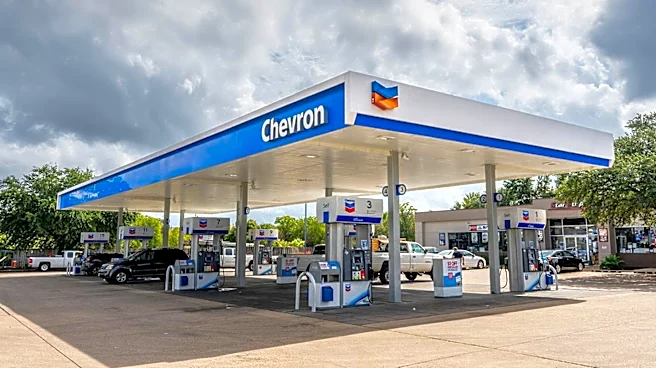
President Donald Trump has expressed disapproval of ExxonMobil and Chevron for their substantial profits amid rising oil prices during the ongoing U.S. conflict with Iran. Speaking at the White House, Trump stated that these companies are making excessive
profits due to a shortage and urged them to reduce consumer prices. Chevron reported a significant increase in earnings to $12 billion, up from $2.5 billion the previous year, while ExxonMobil's profits more than doubled to $14.5 billion. The conflict with Iran, which began with U.S. and Israeli strikes on February 28, has led to a 20% increase in U.S. crude oil prices, exacerbated by Iran's attempts to disrupt oil exports through the Strait of Hormuz. As a result, U.S. oil futures averaged $92 per barrel in the second quarter, a 27% increase from the first quarter. Gasoline prices have also surged, with the national average reaching $4.09 per gallon, a 40% increase from pre-war levels.
Why It's Important?
The criticism from President Trump highlights the tension between government expectations and corporate profit-making during times of economic strain. The significant profits reported by ExxonMobil and Chevron come at a time when consumers are facing higher gasoline prices, which could lead to public discontent. The situation underscores the broader economic impact of geopolitical conflicts on domestic markets, particularly in the energy sector. The pressure on these companies to lower prices could influence their future pricing strategies and profit margins. Additionally, the ongoing conflict with Iran and its impact on oil supply chains could have long-term implications for global energy markets and U.S. foreign policy.
What's Next?
Following President Trump's comments, there may be increased scrutiny on ExxonMobil and Chevron's pricing strategies and profit margins. The companies could face pressure from both the government and the public to implement measures that alleviate the financial burden on consumers. Additionally, the potential for diplomatic negotiations with Iran could influence future oil prices and market stability. Stakeholders in the energy sector will likely monitor developments closely, as any resolution to the conflict could lead to shifts in oil supply and pricing dynamics.