




What's Happening?
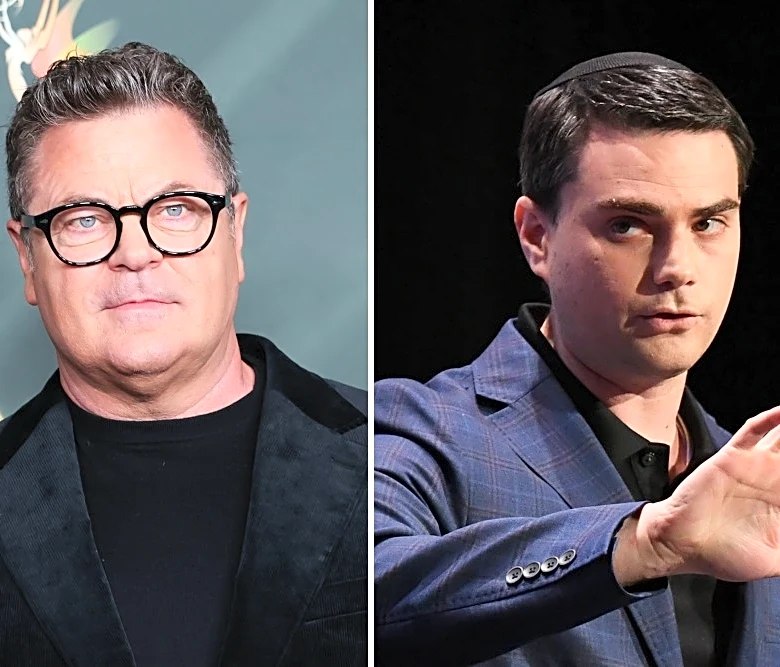
Actor Nick Offerman has publicly criticized conservative commentator Ben Shapiro, accusing him of 'rampant homophobia' and poor 'reading comprehension' regarding Shapiro's past comments on Offerman's role in HBO's 'The Last of Us.' Offerman, who won an Emmy
for his portrayal of Bill, a gay character in a critically acclaimed episode, responded to a clip of Shapiro's podcast where the commentator dismissed the episode's focus on a gay relationship, stating it lacked zombies and real threat. Shapiro had also referred to Offerman's character as 'gay Ron Swanson,' a reference to Offerman's previous role in 'Parks and Recreation.' Offerman expressed embarrassment for Shapiro's interpretation, noting that he found the critique 'dumb and wrong' but also acknowledged the potential reach and influence of such comments.
Why It's Important?
This exchange highlights the ongoing cultural clashes surrounding LGBTQ+ representation in mainstream media and the differing interpretations of artistic content. Shapiro's critique, which focused on the absence of traditional action elements and the presence of a gay storyline, reflects a segment of conservative media commentary that often scrutinizes or dismisses narratives deviating from conventional themes. Offerman's strong rebuttal, labeling Shapiro's comments as homophobic, underscores the sensitivity and importance of inclusive storytelling for many viewers and creators. The incident also brings attention to the power of public figures, like Shapiro, in shaping audience perceptions and potentially influencing public discourse on social issues, even years after the initial commentary. The debate over the episode's content and its critical reception versus conservative criticism illustrates a broader societal tension regarding cultural values and media representation.
What's Next?
While Offerman has stated his intention to avoid engaging directly with such criticisms on social media, preferring to focus on his creative work, the public nature of his response may reignite discussions around the episode and Shapiro's past comments. This could lead to further commentary from both supporters and detractors of Offerman and Shapiro, potentially amplifying the debate across various media platforms. The incident might also encourage other public figures to weigh in on the discussion of media representation and critical commentary. For 'The Last of Us' series, which has already aired its second season and has a third planned for 2027, this renewed attention could either reinforce its reputation for inclusive storytelling or draw further scrutiny from conservative audiences.
Beyond the Headlines
Beyond the immediate exchange, this event touches upon deeper implications concerning media literacy and the responsibility of commentators. Offerman's remark about Shapiro's 'reading comprehension' suggests a concern that some critiques may misinterpret or oversimplify artistic narratives, particularly when those narratives challenge established norms. The incident also raises questions about the impact of online commentary and the potential for 'rampant homophobia' to be disseminated and normalized through influential platforms. It underscores the ongoing struggle for LGBTQ+ acceptance and visibility in popular culture, where even critically acclaimed and Emmy-winning portrayals can become targets of ideological criticism. The actor's decision to turn the criticism into a comedic element in his tour also reflects a coping mechanism and a way to reclaim agency in the face of negative public commentary.