




What's Happening?
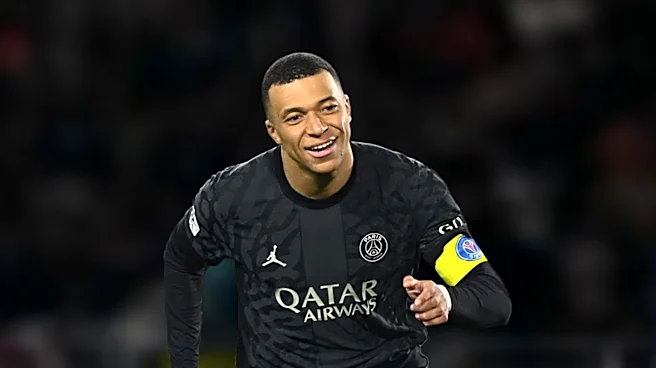
Kylian Mbappé, a prominent football star, has ended his long-standing partnership with Nike, which began when he was seven years old in 2006. His contract with Nike reportedly expired on July 31 and was not renewed. Mbappé has now joined the Swiss brand
On as a shareholder and global ambassador. This move marks On's expansion into the football market, with their first football boots expected in 2027. Mbappé will be actively involved in the development of On's football products, including their Lightspray technology. This strategic shift positions Mbappé not just as an endorser but as an owner within the company, a model similar to Roger Federer's involvement with On. The transition comes at a challenging time for Nike, which has reported a 4% decrease in fourth-quarter revenue on a currency-neutral basis and a 12% drop in digital sales, alongside job cuts.
Why It's Important?
Mbappé's departure from Nike to On is a significant development in the global sportswear industry, particularly for the U.S. market where Nike is a dominant player. This move challenges Nike's long-held supremacy in football endorsements and could impact its market share and brand perception. On's strategy of offering equity stakes to athletes like Mbappé and Roger Federer provides a compelling alternative to traditional endorsement deals, potentially attracting other high-profile athletes and shifting industry norms. For On, securing Mbappé, one of the biggest names in football, is a major coup that will significantly boost its credibility and visibility as it ventures into the highly competitive football apparel market. This could lead to increased competition for Nike and Adidas, forcing them to re-evaluate their athlete engagement strategies and product innovation. The financial performance of On, with a record gross margin of 65.4% compared to Nike's 40.2%, highlights a business model that prioritizes full-price sales and allows for substantial investment in talent and expansion.
What's Next?
On's entry into the football market with Mbappé as a key figure is expected to intensify competition with established giants like Nike and Adidas. The release of On's first football boots in 2027 will be a critical moment, showcasing their product innovation and Mbappé's influence on their design. This partnership could pave the way for On to attract more top athletes from various sports, potentially including basketball or NFL stars, following the successful model established with Roger Federer. Nike, facing declining revenues and market challenges, will likely need to strategize its response to retain its position and attract new talent. The industry may see a trend towards more equity-based partnerships for athletes, offering them a deeper stake in the brands they represent. On's continued expansion of its global retail footprint, with over 70 company-owned stores, indicates a strong push for direct-to-consumer sales, which could further impact traditional retail models in sportswear.
Beyond the Headlines
This shift goes beyond a simple endorsement deal; it represents a potential paradigm shift in how athletes and sportswear brands collaborate. By offering Mbappé an equity stake, On is fostering a sense of ownership and long-term commitment, which could lead to more authentic and impactful brand representation. This model, pioneered by Roger Federer, emphasizes credibility and a shared vision, potentially resonating more deeply with consumers than traditional celebrity endorsements. The move also highlights the evolving landscape of the sportswear industry, where newer brands like On are challenging established players by focusing on performance, innovation, and a direct connection with athletes. This could lead to a more diversified and competitive market, benefiting consumers with a wider range of high-quality products and innovative technologies. The financial health of On, characterized by higher gross margins, suggests a sustainable business model that prioritizes product quality and brand value over discount-driven sales, a lesson that older brands like Nike might need to consider.