


What's Happening?
Eliza McNitt, an Emmy Awards finalist and VR Grand Prize winner at the Venice Film Festival, is at the forefront of integrating artificial intelligence into filmmaking. Her latest short film, 'ANCESTRA,' is a collaboration with Darren Aronofsky's Primordial
Soup and Google DeepMind. This project uniquely blends live-action footage with generative AI to tell the story of an expectant mother. The narrative explores themes of lineage and cosmic connection, as the mother draws strength from past matriarchs and dying stars to ensure her daughter's survival. McNitt previously created 'SPHERES,' a VR acquisition from Sundance, which was executive produced by Darren Aronofsky and featured notable actors.
Why It's Important?
This collaboration signifies a pivotal moment in the evolution of the film industry, showcasing the increasing integration of artificial intelligence into creative processes. The use of generative AI in 'ANCESTRA' by established filmmakers like McNitt and Aronofsky's production company, alongside a tech giant like Google DeepMind, demonstrates a serious commitment to exploring new storytelling methodologies. This development could lead to significant shifts in production pipelines, potentially reducing costs, accelerating post-production, and enabling visual effects previously deemed impossible or too expensive. For the U.S. film industry, it represents a move towards embracing cutting-edge technology to push creative boundaries, potentially setting new standards for visual narrative and immersive experiences. It also highlights the growing interdisciplinary nature of filmmaking, merging artistic vision with advanced technological capabilities.
What's Next?
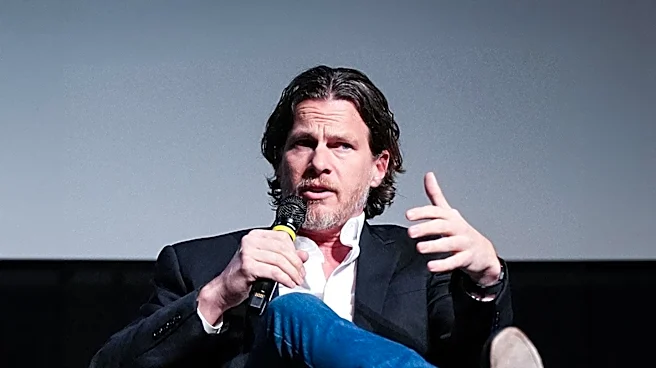
The upcoming 'TheGrill' event in Los Angeles will feature a panel discussing the future of filmmaking with AI, where Eliza McNitt will share insights into her work. This event, taking place at the DGA Theater Complex, will bring together leading voices in AI filmmaking to explore how traditional production methods are combining with emerging tools. The discussions will likely cover the expansion of creative possibilities and the realization of ambitious projects through hybrid live-action/AI workflows. The insights shared at 'TheGrill' could influence broader adoption of AI technologies across the industry, from independent filmmakers to major studios. This ongoing dialogue and practical application of AI in projects like 'ANCESTRA' are expected to shape future production models and creative approaches in cinema.
Beyond the Headlines
The integration of generative AI in filmmaking, as exemplified by 'ANCESTRA,' raises profound questions about authorship, creativity, and the future role of human artists. While AI can offer unprecedented tools for visual creation and narrative enhancement, it also prompts discussions about the unique human element in storytelling and the potential for AI to either augment or diminish it. There are ethical considerations regarding data sourcing for generative AI, intellectual property rights, and the potential impact on employment within traditional film crafts. This technological shift could redefine what it means to be a 'filmmaker' and challenge established artistic paradigms, leading to new forms of cinematic expression and potentially new legal and philosophical frameworks for art created with artificial intelligence.