







What's Happening?
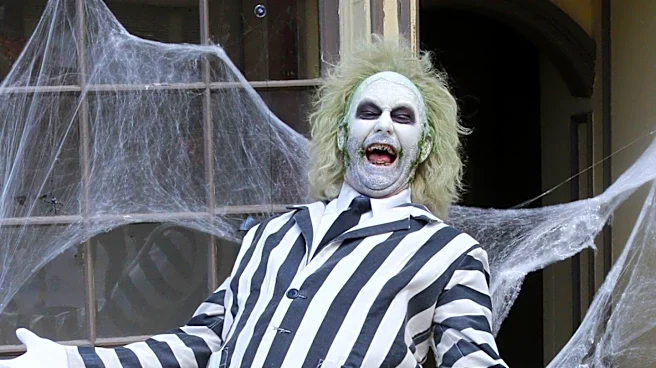
Before its release, Warner Bros. considered renaming Tim Burton's 1988 film 'Beetlejuice' to 'House Ghost.' According to composer Danny Elfman, who has frequently collaborated with Burton, the studio believed the original title was too complicated and
that 'no one will come and see a movie called "Beetlejuice."' Despite these concerns, Warner Bros. ultimately decided to retain the 'Beetlejuice' title, reportedly thinking the film would be a disaster regardless. The film, starring Michael Keaton as the titular 'bio-exorcist,' went on to achieve significant success. This incident highlights the creative tensions that can arise between filmmakers and studios regarding marketing and audience perception. Elfman also recounted issues during test screenings for Burton's 1990 film 'Edward Scissorhands,' where the absence of his iconic score led to negative audience reactions, with viewers having 'no clue what to make of this thing.'
Why It's Important?
This revelation underscores the significant influence and sometimes conflicting perspectives between film studios and creative teams in the U.S. entertainment industry. Studio decisions regarding film titles and marketing can profoundly impact a movie's initial reception and box office performance. The anecdote about 'Beetlejuice' demonstrates that even established studios can misjudge audience appeal, and that creative persistence can sometimes lead to unexpected success. For 'Edward Scissorhands,' the initial negative test screening without the score highlights the critical role of music in shaping audience emotional responses and understanding of a film's narrative and tone. These instances illustrate the complex interplay of artistic vision, commercial considerations, and audience psychology in Hollywood, where a film's identity can be subject to intense debate before its public release.
What's Next?
While this specific event is historical, the dynamic between creative vision and studio marketing continues to be a constant in the film industry. Future film productions will likely face similar internal debates over titles, marketing strategies, and test screening feedback. The success of 'Beetlejuice' under its original title serves as a case study that might encourage studios to sometimes trust the creative team's vision, especially for unique or unconventional projects. For upcoming films by directors with distinct styles, like Tim Burton, studios may continue to weigh the commercial appeal of a project against its artistic integrity, potentially leading to ongoing discussions about how best to present a film to the public. The lessons learned from past successes and near-misses continue to inform current and future decision-making processes in Hollywood.
Beyond the Headlines
The story of 'Beetlejuice's' title debate and the 'Edward Scissorhands' test screening offers a deeper look into the often-unseen struggles within the film production process. It reveals that even critically acclaimed and commercially successful films can face significant internal skepticism and challenges during their development. This highlights the subjective nature of artistic evaluation and market prediction in the entertainment sector. The reliance on test screenings, while intended to gauge audience reaction, can sometimes be misleading, especially when a film is not presented in its complete form, as was the case with 'Edward Scissorhands' lacking its score. This raises questions about the methodology and interpretation of audience feedback in shaping final creative decisions, and the balance between artistic integrity and commercial viability in a highly competitive industry.