






What's Happening?
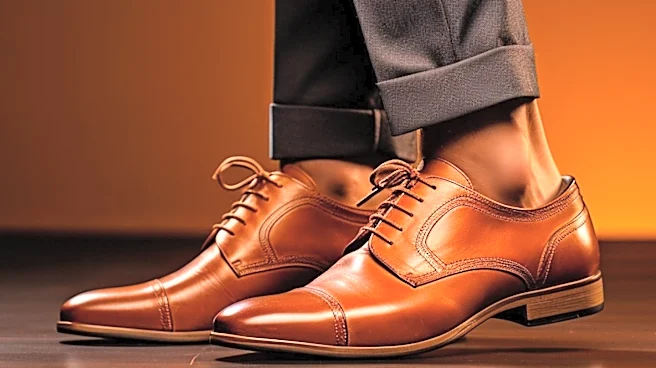
Birchbury has published an article offering guidance to lawyers on appropriate footwear for various professional settings, including court appearances and office days. The article emphasizes the importance of balancing comfort with formality, noting that
lawyers often spend long hours on their feet. It recommends specific shoe styles from Birchbury, such as the Brenston for court days due to its wide toe box and zero-drop sole, designed for extended standing. For smart casual office days, the article suggests chukka boots like the Carnforth, and for more relaxed office environments, leather sneakers like the Bramford. Penny loafers, such as the Emhurst, are recommended for days that transition between casual mornings and formal client meetings. The piece also discusses color choices, advising black for court and formal settings, while brown is deemed suitable for most modern law offices and smart casual wear. The overarching theme is that comfort should be a primary driver in shoe selection, alongside adherence to dress codes.
Why It's Important?
This guidance is significant for legal professionals in the U.S. as it addresses a practical yet often overlooked aspect of their daily work: footwear that supports both professional appearance and physical well-being. Lawyers frequently face demanding schedules that involve prolonged standing in court or extensive walking between offices, making comfortable and appropriate shoes essential. The article's focus on features like wide toe boxes and zero-drop soles highlights a growing awareness of ergonomic considerations in professional attire, which can impact health and productivity. For the footwear industry, it underscores a market demand for shoes that combine traditional aesthetics with modern comfort technologies. This trend could encourage manufacturers to innovate in designing professional footwear that caters to the specific needs of demanding professions, potentially influencing product development and marketing strategies within the U.S. business casual and formal wear segments.
What's Next?
As awareness of the importance of ergonomic and comfortable professional attire grows, similar specialized guides for other professions requiring long hours on one's feet may emerge. Footwear brands might increasingly market specific lines of shoes tailored to the needs of professionals like lawyers, doctors, or educators, emphasizing comfort features alongside style. We could see more collaborations between footwear companies and ergonomic experts to develop and certify professional shoes. Additionally, the legal profession itself might see a gradual shift in dress code interpretations, with greater acceptance of comfortable yet professional footwear, especially in less formal settings. This could lead to a broader range of acceptable shoe styles in law offices, moving beyond traditional, often less comfortable, options. The emphasis on health and well-being in the workplace will likely continue to drive these changes.
Beyond the Headlines
The discussion around lawyers' footwear touches upon deeper cultural and ethical considerations regarding professional appearance and well-being. Traditionally, professional attire has often prioritized formality over comfort, sometimes at the expense of physical health. This article, by advocating for comfort without sacrificing professionalism, reflects a broader societal shift towards valuing employee well-being and recognizing that comfort can enhance performance. Ethically, employers and professional organizations might consider how dress codes impact their members' health and whether more flexible guidelines are warranted. Culturally, it challenges the notion that professionalism must equate to discomfort, suggesting that modern professional standards can integrate both. This evolution in thinking could lead to more inclusive and health-conscious workplace policies across various industries, fostering environments where individuals can perform optimally without compromising their physical comfort.